
Antique Botanical Illustrations: Famous Artists
Antique botanical illustrations are one of the reasons I started selling vintage books. These beautiful plates capture nature through the eyes of past artists.
Whether you collect natural history books or simply enjoy their beauty, this post introduces three botanical illustrators and the work they created.
I’m also creating a botanical print collection for Six Bookshop, due in late November. It will feature restored antique botanical plates for creative inspiration, learning, and printing to display at home.
If you’d like to hear when the collection launches, sign up using the email form at the bottom of this post.
1 Anne Pratt
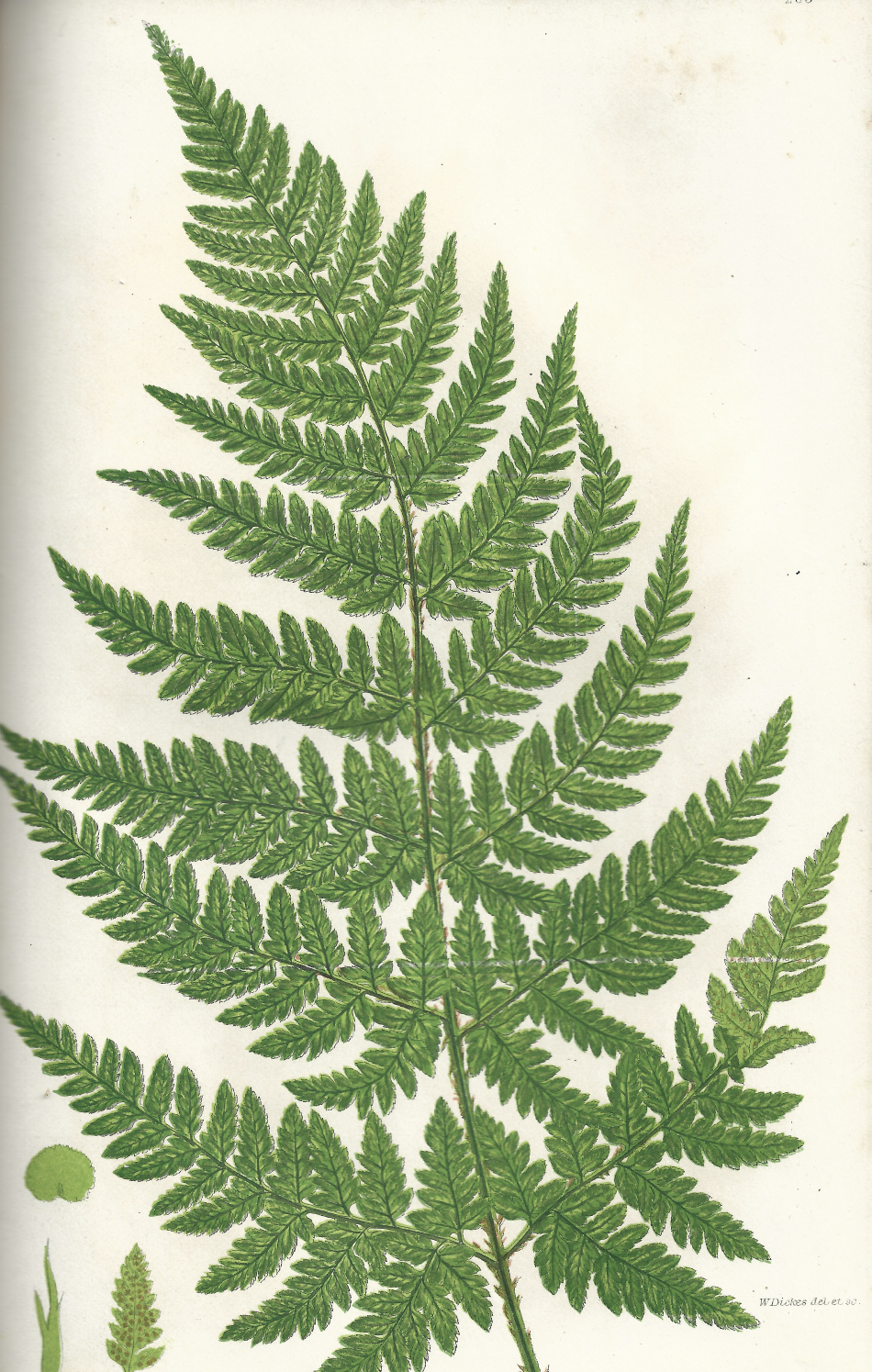
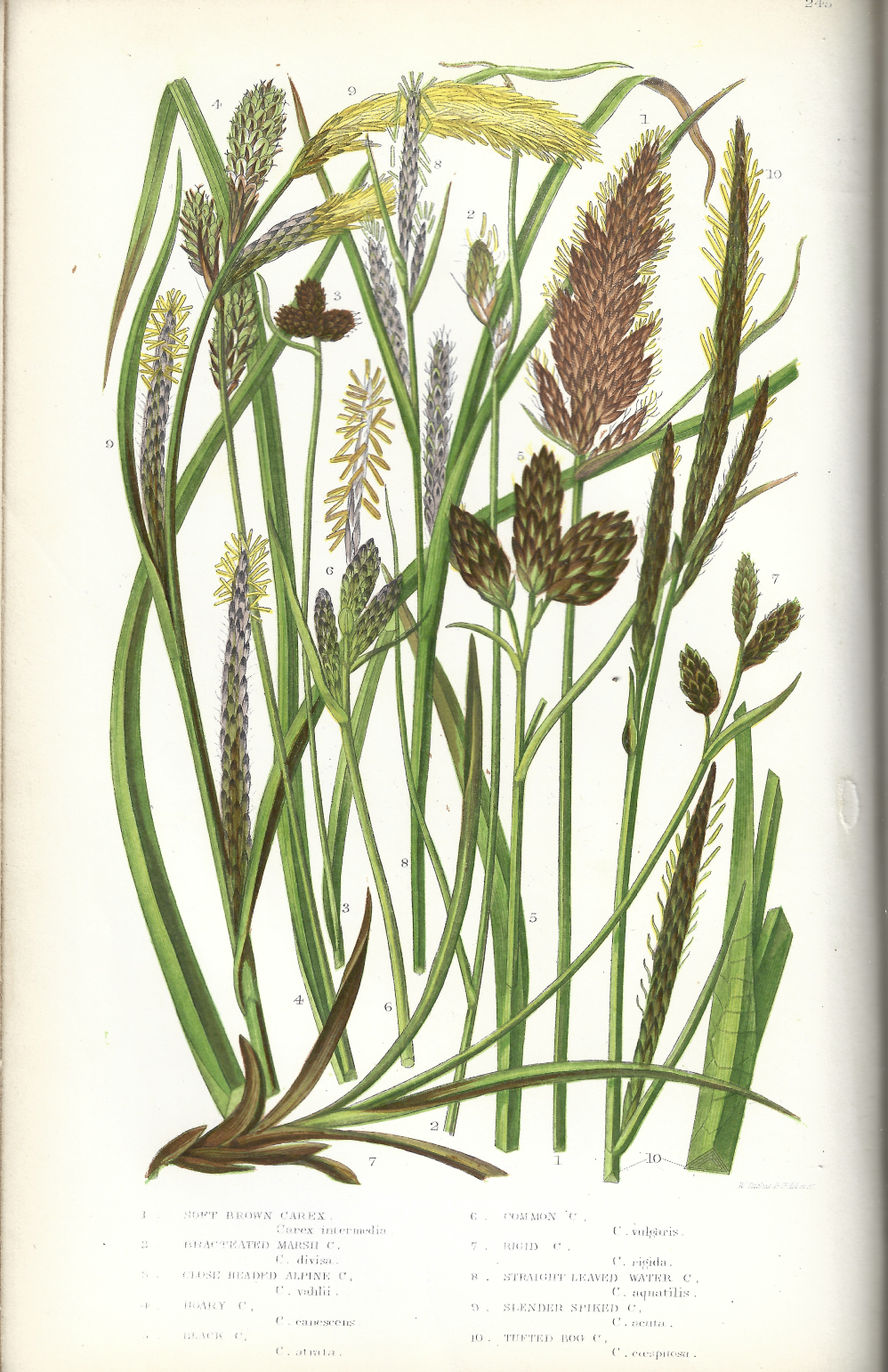
Anne Pratt (1806–1893) was a Victorian botanical illustrator and author from Kent, England. Her books helped introduce a wider audience to British plants, combining accessible descriptions with beautiful illustrations.
One of her best-known works is The Flowering Plants, Grasses, Sedges, and Ferns of Great Britain. Her interest in botany developed with encouragement from a doctor and friend, while her sister collected specimens for her to study and draw.
For me, her fern antique botanical illustrations stand out in particular. Their shapes and shades of green show just how much beauty there is in everyday plants.
I have come across Anne’s work many times while sourcing books for Six Bookshop, and recently sold a copy of Our Native Songsters.
Notable Works:
The Ferns of Great Britain, and Their Allies the Club-Mosses, Pepperworts, and Horsetails (1855).
Poisonous, Noxious, and Suspected Plants, of Our Fields and Woods (1857).
The British Grasses and Sedges (1859).
2. F. Edward Hulme
Frederick Edward Hulme (1841–1909) was a British artist, teacher, and botanist. He is best known for his detailed botanical illustrations. Born in Staffordshire, England, he studied at the South Kensington School of Art, now the Royal College of Art.
His work combines careful botanical observation with detailed illustration. In particular, antique botanical illustrations within Familiar Wild Flowers published from 1879 illustrated by Hulme, with text by Shirley Hibberd. The work features colourful illustrations accompanied by descriptions of British wildflowers.
His illustrations were reproduced using chromolithography, a colour-printing process The resulting plates capture the rich colours and delicate details that make antique botanical illustrations so appealing.
I often find his books while sourcing stock and can immediately recognise a bright floral Hulme illustration.
For example, I have recently sold an early 20th-century edition of Familiar Wild Flowers through my website shop. I’ll also be including some of his illustrations in my upcoming botanical print collection.
Notable Works:
Familiar Wild Flowers (1878)
Familiar Garden Flowers (1879)
The History, Principles and Practice of Symbolism in Christian Art (1891)
Maria Sibylla Merian
Maria Sibylla Merian (1647–1717) was a German naturalist and scientific illustrator. Her work brings plants and insects together, showing caterpillars, butterflies, and moths alongside the botanicals.
Merian documented the stages of insect metamorphosis. Her antique botanical illustrations tell a story about the relationships between living things. Notably, David Attenborough considers Merian among the most important contributors to the field of entomology.
In 1699, aged 52, she travelled with her daughter Dorothea Maria to the Dutch colony of Suriname, helping to finance the expedition by selling her paintings.
While there, her research drew on the knowledge of Indigenous and enslaved people in Suriname. After returning to Amsterdam, she published her best-known work, Metamorphosis Insectorum Surinamensium, in 1705.
Her work is unique, and I admire how she combined her two interests: entomology and botanical study.
Notable works:
Neues Blumenbuch (1680)
Der Raupen wunderbare Verwandelung und sonderbare Blumen-nahrung (1679)
Metamorphosis Insectorum Surinamensium (1705)
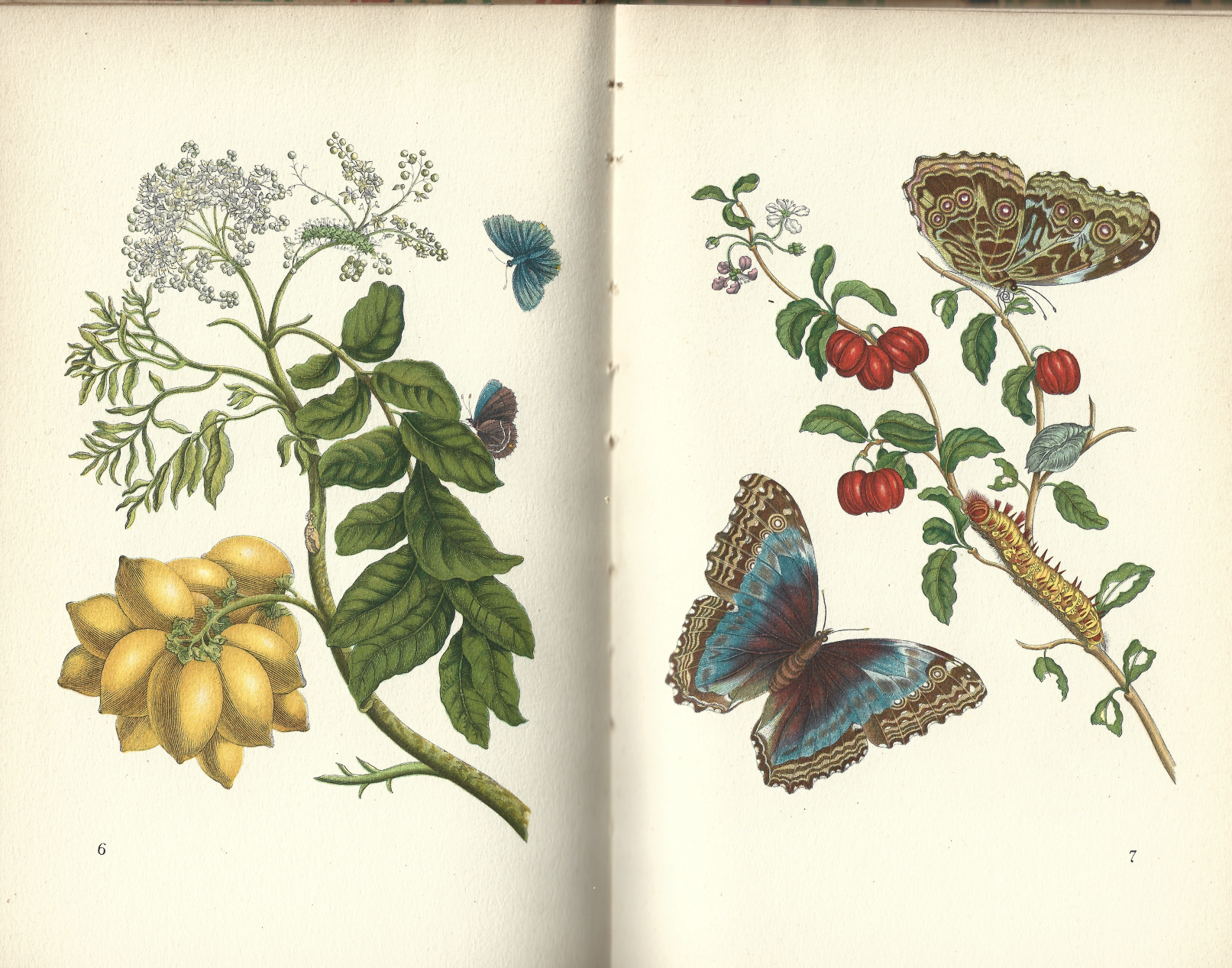
Das kleine Buch der Tropenwunder
Upcoming Collection
Earlier this year, I began scanning plates from the books I find for Six Bookshop. Some are so rare that I haven’t found another copy for sale online. This inspired me to preserve their illustrations and make them available for others to enjoy.
I’m now restoring these scans for a botanical print collection, which will include an eBook and high-resolution images. I aim to launch the collection in late November, with a selection of antique botanical illustrations for both reference and printing.
If you’d like to hear when the collection is ready, enter your email in the box below