
Fine Book Binding: A Beginner’s Guide
Fine book binding transforms books. These covers come in many styles and materials, from leather and calfskin to silk and gold.
As a collector, you might buy fine bindings for their value, decoration or nostalgia. Most of all, these books are a pleasure to own and will transform a bookshelf.
In this beginner’s guide, I will explore the different types of fine book binding, what makes them special, and how to start collecting beautiful books.
If you're new to my site, I also sell books.
Fine Book Binding
Fine bindings are the highest level of book binding. They often feature materials like leather and vellum, along with decoration. Fine bindings come in many styles, so let’s explore the most popular ones.
Materials
Leather is one of the most popular materials in fine bookbinding. Books are bound in full leather or in a combination of leather and another material.
Common styles include half-leather, quarter-leather, and three-quarter-leather bindings.
For example, in quarter-leather binding, leather typically covers the spine and a smaller portion of the cover.
Morocco leather (made from Goatskin) is generally smoother and finer in texture. Another material is Vellum, made from animal skin. It has a pale, translucent appearance. You might also find Silk and other fabrics in fine book binding.
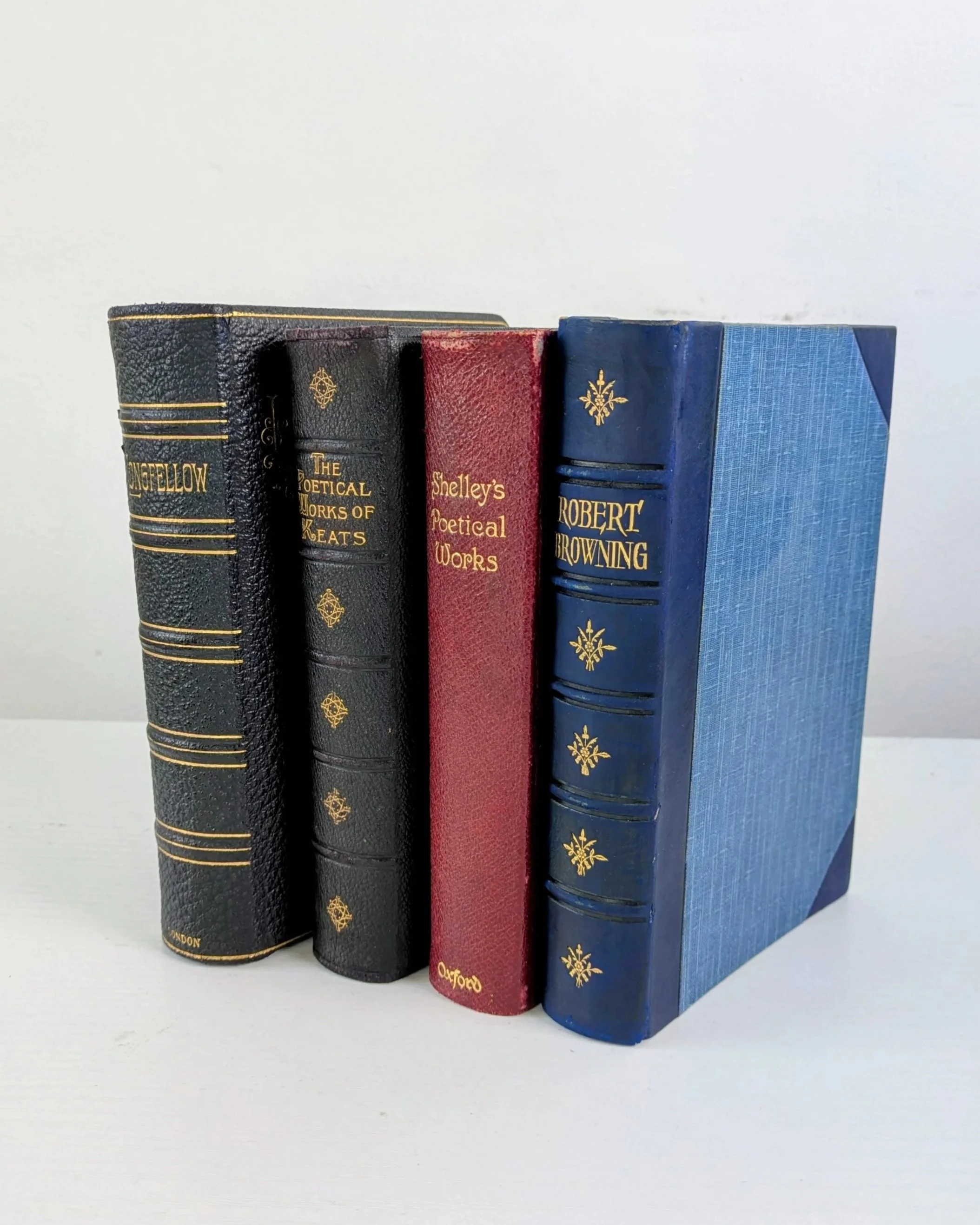
Fine Book Bindings
Décor
You will also find decoration on fine book binding. These Fine bindings often feature gold tooling, hand-painted designs, or colourful decor. Others incorporate precious materials, gems or unusual details.
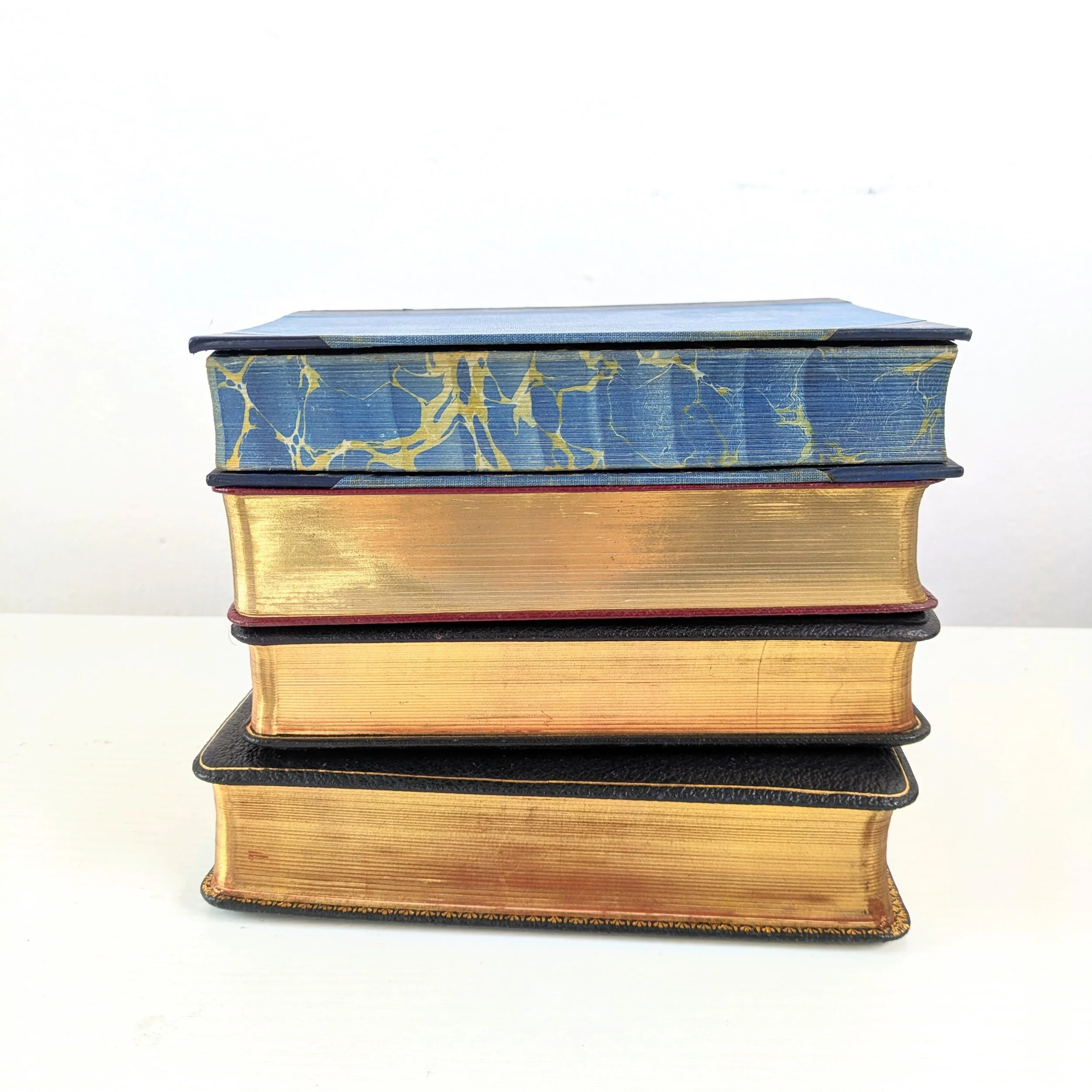
Gilt edges are also popular. This is where the page edges are coated with a metallic finish. Some bindings also feature elaborate clasps, metalwork or jewels.
No single style dominates fine binding. Some collectors prefer elegant designs, while others prefer elaborate decoration and unusual materials.
Details
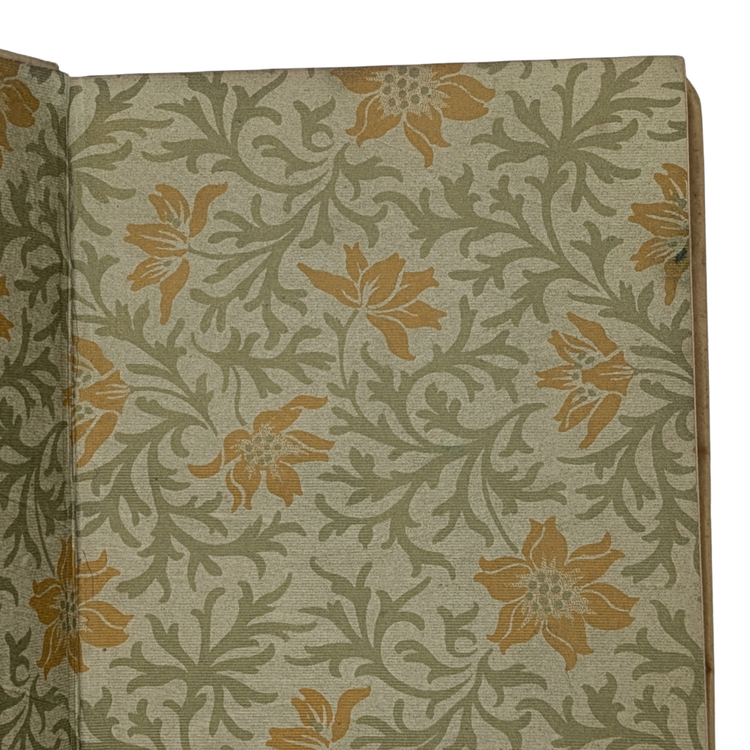
Details can make all the difference. For example, decorative or marbled endpapers. Marbled book edges and gold leaf edges can boost a book's appearance.
Inside the covers, you may find Silk Linings and decorative borders. Gold tooling adds further decoration, while leather can have patterns. These finishing touches turn a beautifully bound book into a work of art in its own right.
Starting a Fine Book Collection
Start by choosing a favourite author or a binding you love. For example, you might collect only 19th-century half-calf bindings, works on a press (like Folio Society), or fine bindings of a specific genre (like poetry or travel).
You don't need a large budget to begin collecting. Beautifully bound books are in second-hand bookshops, antique markets and online auctions. Start with books that appeal to you, and take time to learn about different styles.
Budget Collection Ideas –
· Full-Leather Eastern Press
· Folio Society editions
· Penguin Clothbound Classics
· The Franklin Library
· Chiltern Classics
Condition
When buying second-hand fine bindings, take time to check the book's condition. Look out for loose boards, cracked joints, worn or peeling leather.
For online purchases, ask for clear photographs of the spine, covers and any areas of damage. Remember that for older books some wear is ok. However, significant damage or poor repairs can affect both the appearance and value of a fine binding.
Buying Fine Bound Books
There are several places to look when starting a fine book collection. Online marketplaces such as AbeBooks and eBay shops offer a wide range of decorative books. In addition, antique markets and second-hand bookshops are good options.
Auctions are another option, particularly if you're willing to research lots before bidding. Fine bindings can occasionally sell for less than expected when they attract little attention. However, it's important to factor in buyer's premiums and other auction costs.
You can also browse specialist book dealers.
If you're looking for fine books to add to your collection, browse my selection of rare and interesting books at Six Bookshop.
You can also join the newsletter to get first dibs on books every month.
Antique Botanical Illustrations: Famous Artists
Antique botanical illustrations are one of the reasons I started selling vintage books. These beautiful plates capture nature through the eyes of past artists.
Whether you collect natural history books or simply enjoy their beauty, this post introduces three botanical illustrators and the work they created.
I’m also creating a botanical print collection for Six Bookshop, due in late November. It will feature restored antique botanical plates for creative inspiration, learning, and printing to display at home.
If you’d like to hear when the collection launches, sign up using the email form at the bottom of this post.
1 Anne Pratt
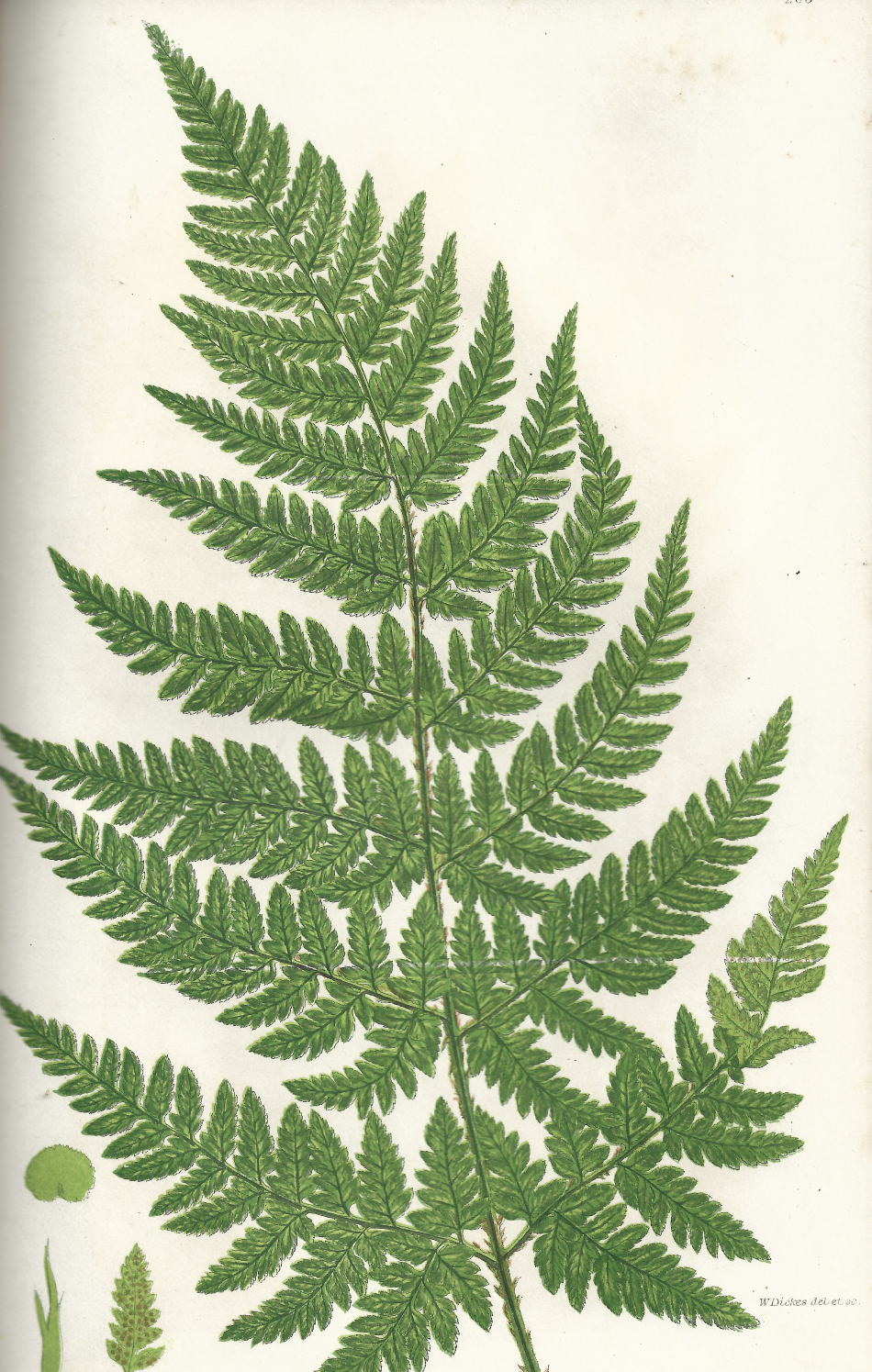
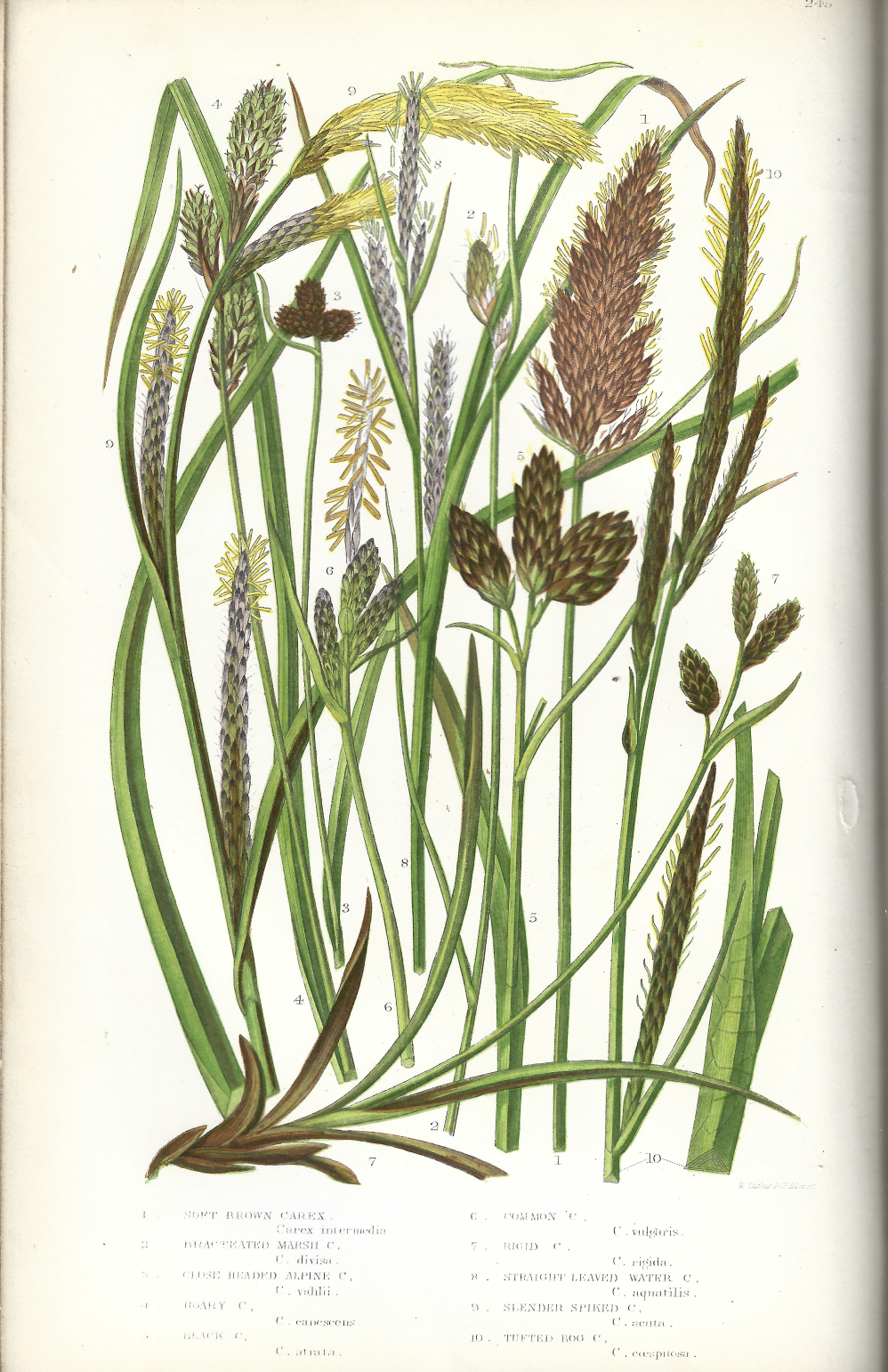
Anne Pratt (1806–1893) was a Victorian botanical illustrator and author from Kent, England. Her books helped introduce a wider audience to British plants, combining accessible descriptions with beautiful illustrations.
One of her best-known works is The Flowering Plants, Grasses, Sedges, and Ferns of Great Britain. Her interest in botany developed with encouragement from a doctor and friend, while her sister collected specimens for her to study and draw.
For me, her fern antique botanical illustrations stand out in particular. Their shapes and shades of green show just how much beauty there is in everyday plants.
I have come across Anne’s work many times while sourcing books for Six Bookshop, and recently sold a copy of Our Native Songsters.
Notable Works:
The Ferns of Great Britain, and Their Allies the Club-Mosses, Pepperworts, and Horsetails (1855).
Poisonous, Noxious, and Suspected Plants, of Our Fields and Woods (1857).
The British Grasses and Sedges (1859).
2. F. Edward Hulme
Frederick Edward Hulme (1841–1909) was a British artist, teacher, and botanist. He is best known for his detailed botanical illustrations. Born in Staffordshire, England, he studied at the South Kensington School of Art, now the Royal College of Art.
His work combines careful botanical observation with detailed illustration. In particular, antique botanical illustrations within Familiar Wild Flowers published from 1879 illustrated by Hulme, with text by Shirley Hibberd. The work features colourful illustrations accompanied by descriptions of British wildflowers.
His illustrations were reproduced using chromolithography, a colour-printing process The resulting plates capture the rich colours and delicate details that make antique botanical illustrations so appealing.
I often find his books while sourcing stock and can immediately recognise a bright floral Hulme illustration.
For example, I have recently sold an early 20th-century edition of Familiar Wild Flowers through my website shop. I’ll also be including some of his illustrations in my upcoming botanical print collection.
Notable Works:
Familiar Wild Flowers (1878)
Familiar Garden Flowers (1879)
The History, Principles and Practice of Symbolism in Christian Art (1891)
Maria Sibylla Merian
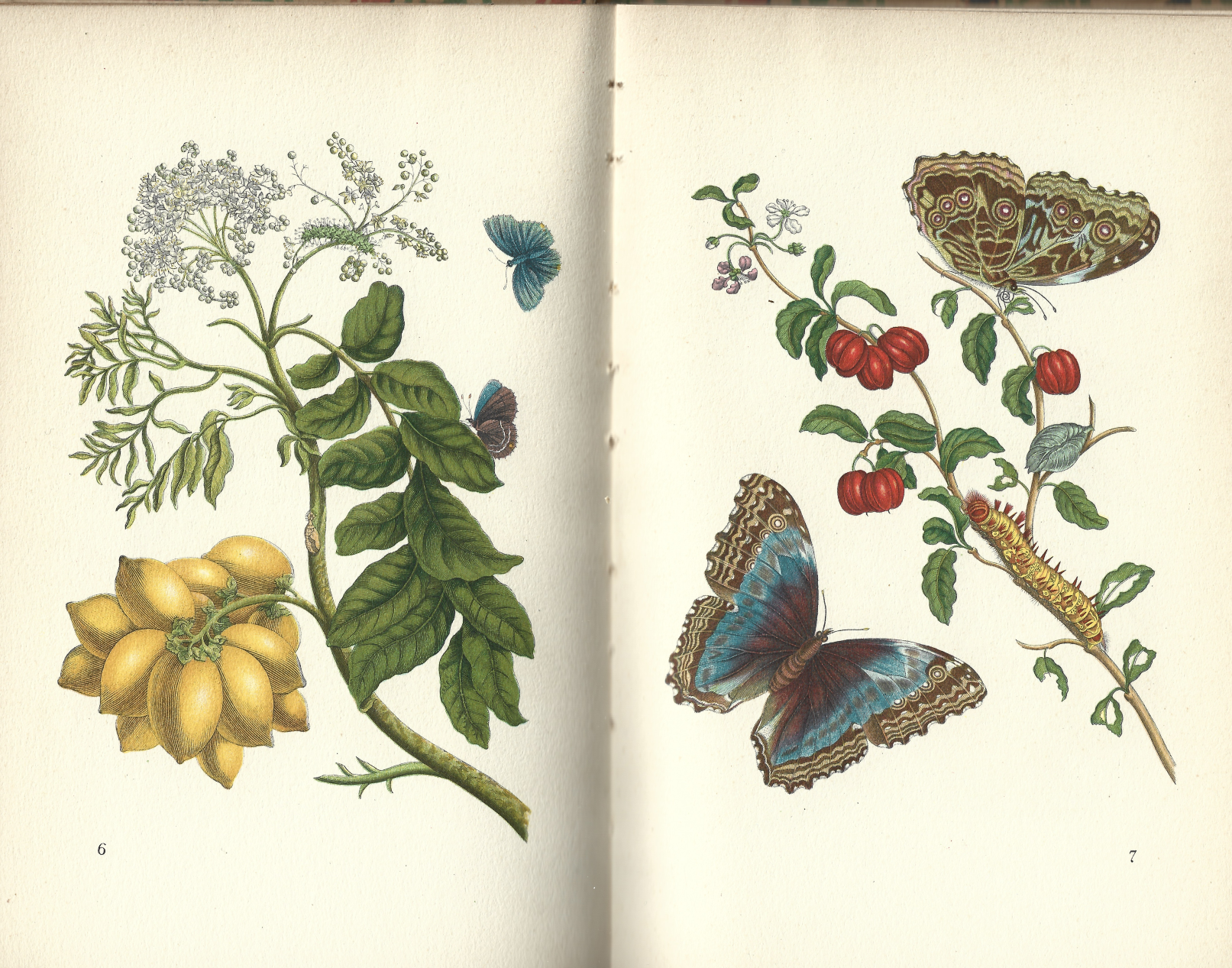
Maria Sibylla Merian (1647–1717) was a German naturalist and scientific illustrator. Her work brings plants and insects together, showing caterpillars, butterflies, and moths alongside the botanicals.
Merian documented the stages of insect metamorphosis. Her antique botanical illustrations tell a story about the relationships between living things. Notably, David Attenborough considers Merian among the most important contributors to the field of entomology.
In 1699, aged 52, she travelled with her daughter Dorothea Maria to the Dutch colony of Suriname, helping to finance the expedition by selling her paintings.
While there, her research drew on the knowledge of Indigenous and enslaved people in Suriname. After returning to Amsterdam, she published her best-known work, Metamorphosis Insectorum Surinamensium, in 1705.
Her work is unique, and I admire how she combined her two interests: entomology and botanical study.
Notable works:
Neues Blumenbuch (1680)
Der Raupen wunderbare Verwandelung und sonderbare Blumen-nahrung (1679)
Metamorphosis Insectorum Surinamensium (1705)
Das kleine Buch der Tropenwunder
Upcoming Collection
Earlier this year, I began scanning plates from the books I find for Six Bookshop. Some are so rare that I haven’t found another copy for sale online. This inspired me to preserve their illustrations and make them available for others to enjoy.
I’m now restoring these scans for a botanical print collection, which will include an eBook and high-resolution images. I aim to launch the collection in late November, with a selection of antique botanical illustrations for both reference and printing.
If you’d like to hear when the collection is ready, enter your email in the box below
6 Rare Children’s Books - Worth Money
What makes rare children's books worth money? Even if a book is vintage, that doesn't make it valuable.
First Booksellers look for first editions, dust jackets, and attractive bindings.
The market determines a book's value. As such, well-known books sell for the highest prices. Below, I will look at rare children's books that are worth money and how to identify them. I also have a download of rare books and their values.
If you are looking to buy rare children's books, I might have some for sale in my website shop. I sell a variety of books, from children's vintage books to natural history.
1 Cicely Mary Barker – Flower Fairies
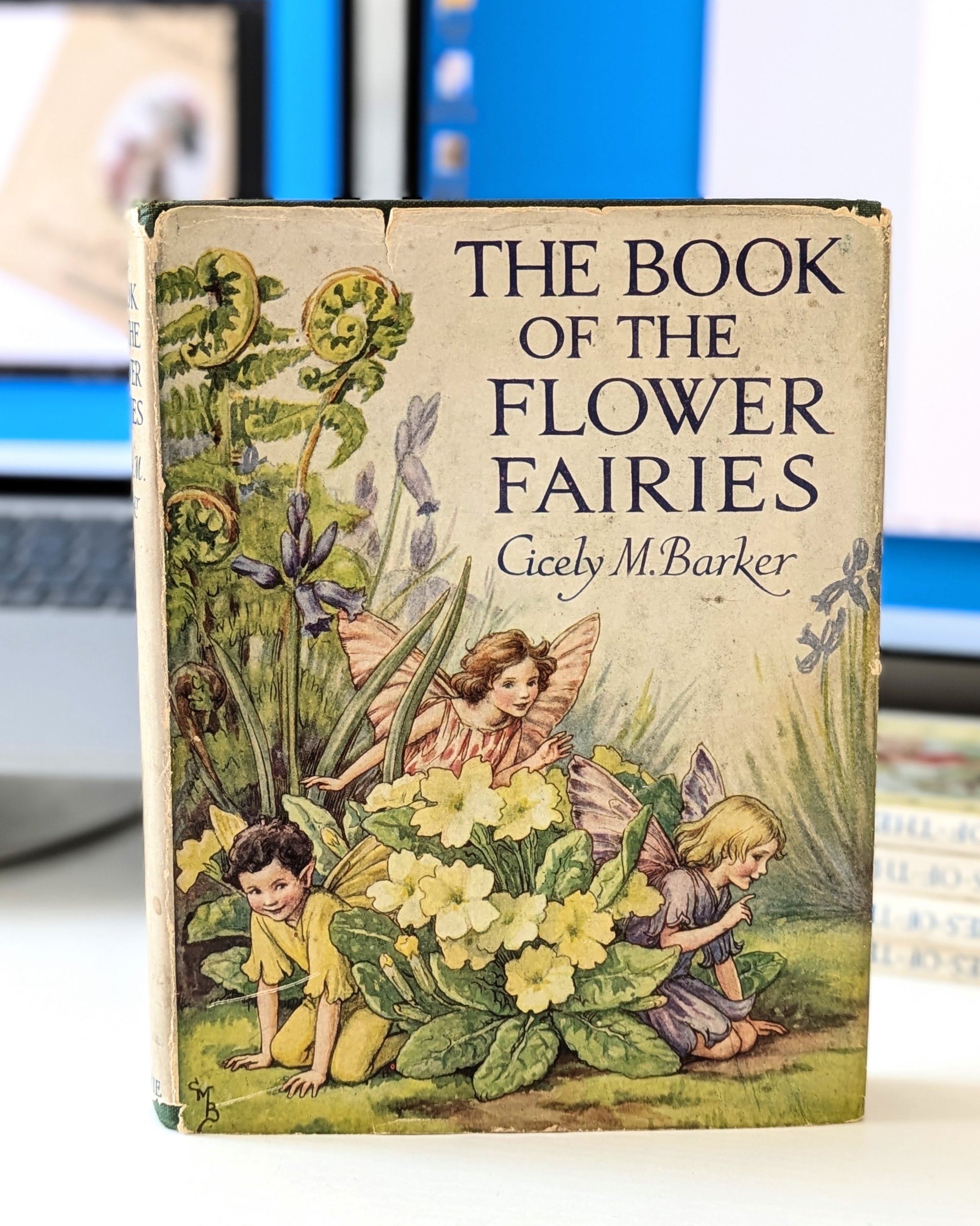
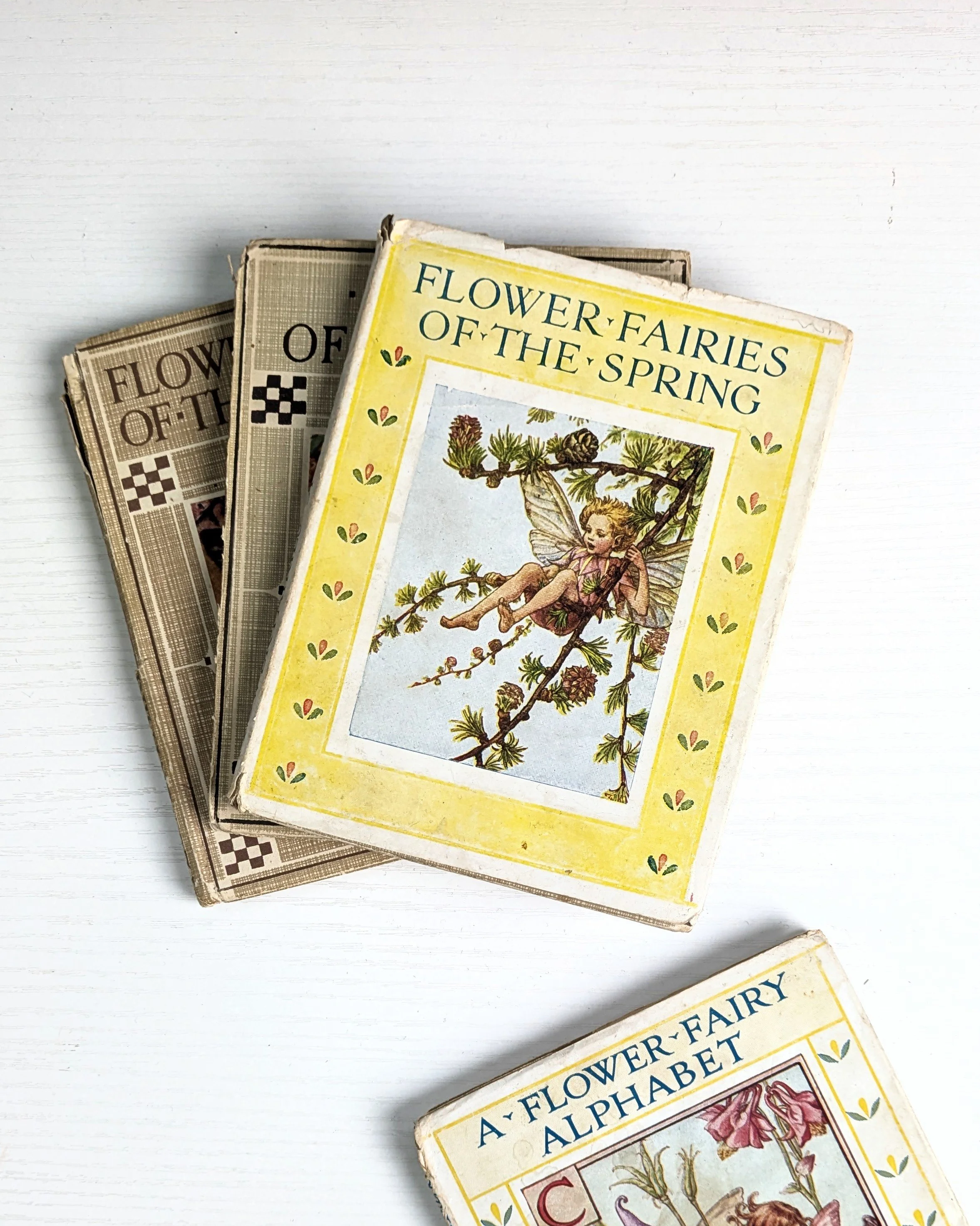
First-edition flower fairy books are easy to find, but it's not always easy to spot them. First, they sell for more with a dust jacket and in good condition.
The small pocket books break easily at the spine. You will also need to check that they have complete plates, as rare children's books often have plates removed by collectors.
Check that the publisher is Blackie & Son Ltd. If it's Frederick Warne, it is a much later reprint. Many of these books are also undated, so you can check the price on the dust jacket. First editions list 1/6 shillings and 1940s reprints list 2/6 shillings. Although some later editions with dust jackets are also worth money,
· Blackie & Son Ltd
· 1920s Editions
2 A.A. Milne - Winnie-the-Pooh
Vintage children's books that are worth money are likely books you already know. Winnie-the-Pooh books with a pristine dust jacket have sold for £10,000, but copies without a dust jacket still sell for a few hundred.
Luckily, these books have a clear date on the copyright page, 1926. If it has a dust jacket, you will find the price is 7/6 net. You can compare your copy to others selling at a high price on Peter Harrington's A.A. Milne Page.
As with all books, copies with pristine jackets, inscribed and earlier editions are all classed as rare valuable children’s books.
· Methuen & Co. Ltd
· 1920s Editions
3 Beatrix Potter – Peter Rabbit
The first edition of Peter Rabbit is one of the most sought-after rare children's books. The first private printings sell for £30,000, but it's more likely you will find a later commercial reprint valued at a few hundred.
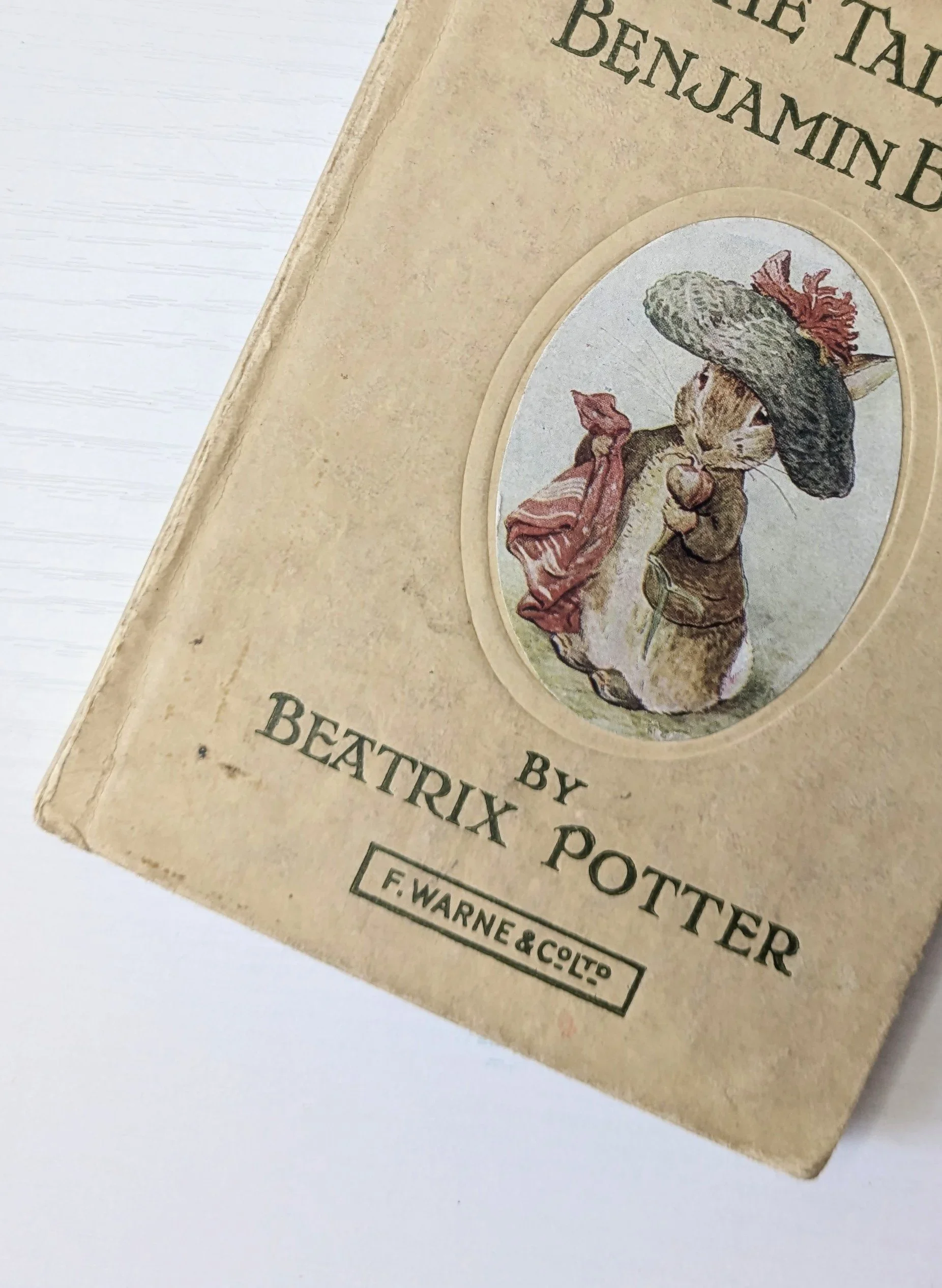
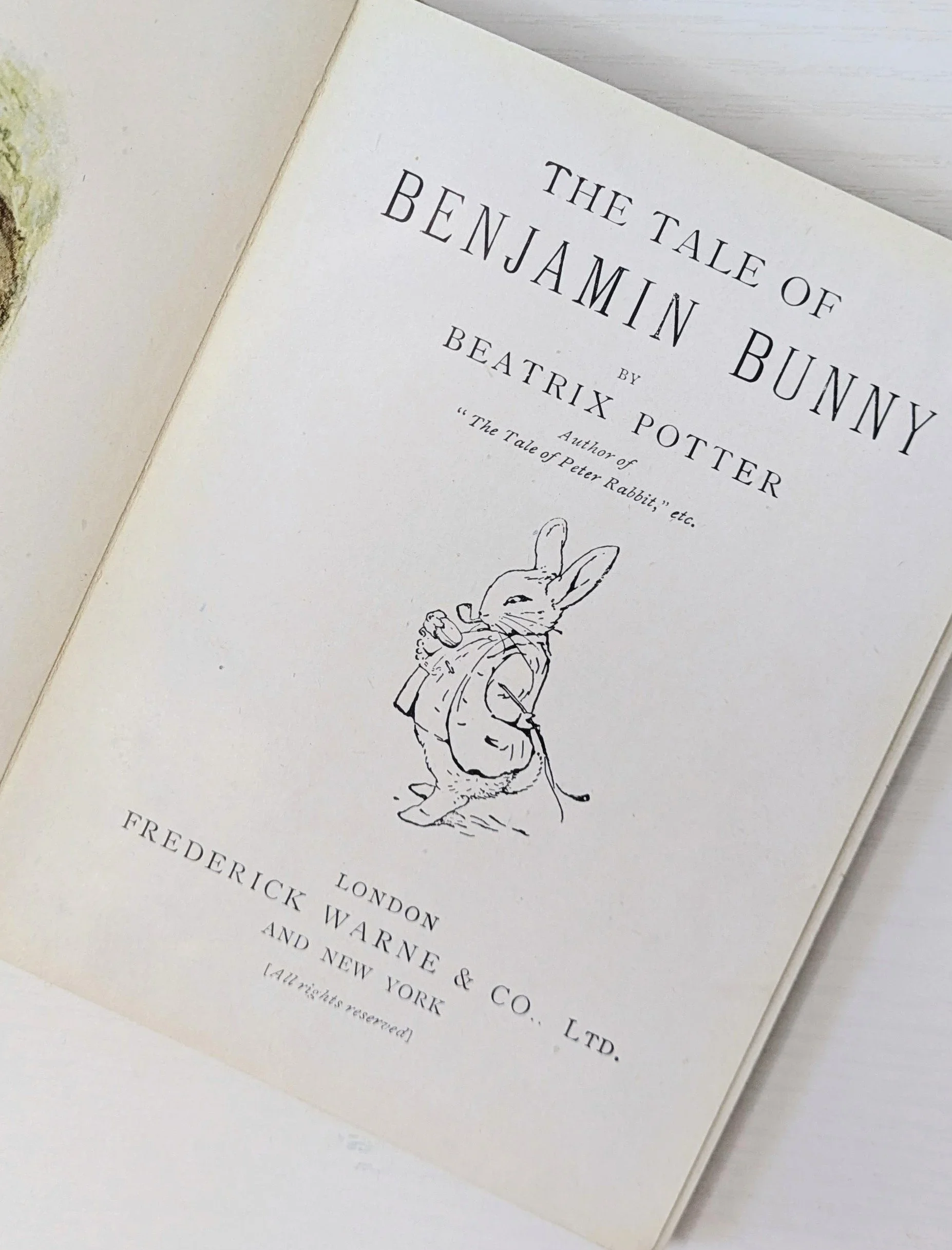
The 1917 Rule is the main factor to keep in mind. Previously, I wrote about how to find a first edition of Beatrix Potter. In 1917, Warne became a limited company. So, if you have a book that says F. Warne & Co. Ltd, you have a later print that is not a true first and not worth a lot of money.
If you think you have found one, take clear photographs of the cover, spine, and title page and compare them with others.
· Frederick Warne & Co
· The 1917 Rule
4 Lewis Carroll – Alice In Wonderland
One of the most sought-after rare children’s books is Alice in Wonderland. True first editions (of which there are only 23 copies) would be worth a lot, but you’re unlikely to find one. Other early editions sell for £10,000.
The US first editions from D. Appleton & Company can also sell for a few thousand. You can find valued Alice in Wonderland books on the Alice Looking website.
· UK Macmillan and Co.
· US D. Appleton & Company
5 Rudyard Kipling – Jungle Book
The Jungle Book is Kipling’s most sought-after book. The title page will explicitly state the date 1894. Later prints will also say second edition or reprint. The rare cover features three elephants, and the spine a cobra.
Look out for two books: the rare American first edition has a dust cover featuring a black elephant. The UK first editions are more common and are still worth money. These have a blue cover with gold. Overall, editions in the 1890s are valuable.
· Macmillan and Co.
· 1890s Editions
6 J. M. Barrie – Peter Pan
The First edition of Peter Pan and Wendy was published in 1911 by Hodder & Stoughton. And In the US by Charles Scribner’s Sons. The first novel is in olive-green cloth and illustrated with 13 black & white plates, and is worth about £300.
There is also a Peter Pan in Kensington Gardens with Arthur Rackham, worth as much as £1000. These books aren't too rare, as I have seen many before, but the value depends heavily on condition.
· Peter Pan & Wendy, 1911
· Peter Pan in Kensington Gardens, 1906
Identifying First Editions
Identifying a rare children’s book begins with knowing what to look for. A familiar title or an old publication date is a start, but rarity alone does not guarantee a high value.
The end value depends on the edition, publication date, publisher and, above all, condition. The titles below are useful examples to watch for before checking the edition and printing details more closely.
Rare Children’s Books Worth Money -
· JRR Tolkien - The Hobbit
· Roald Dahl - Matilda
· CS Lewis - Narnia Books
· JK Rowling - Harry Potter
· Michael Bond - Paddington
· J. M. Barrie - Peter Pan
· EB White - Charlotte’s Web
· Enid Blyton - The Famous Five
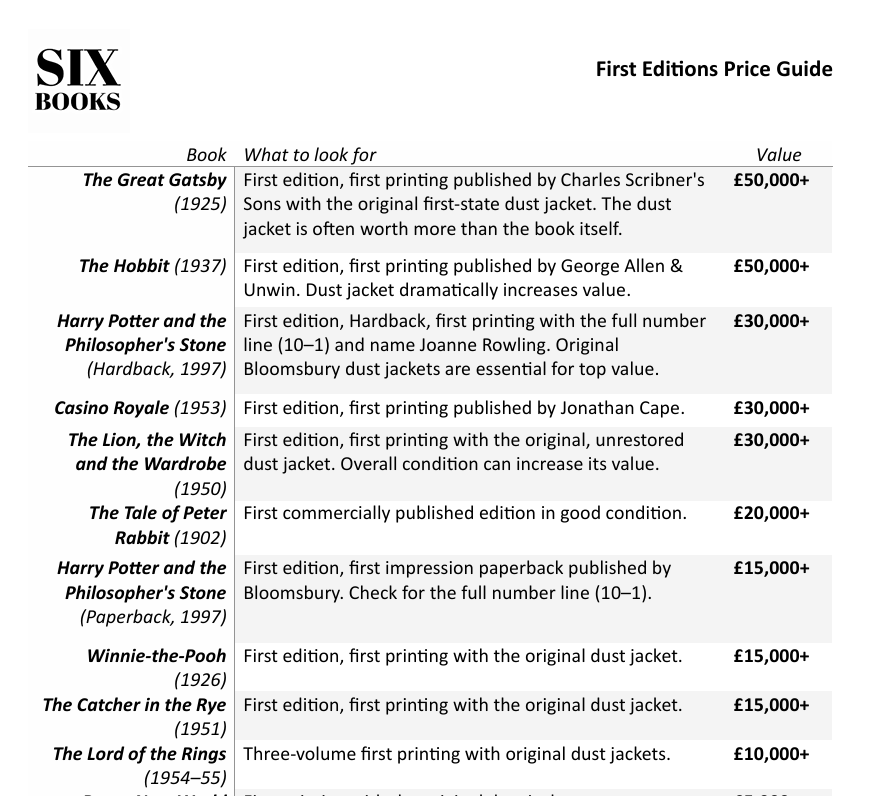
Download the Rare Book Price Guide
Edition & Print
Before deciding that your book is worth money, you need to determine if it’s a true first edition. For vintage books, you will need to look up the book’s date and publisher to confirm they match a first edition. For modern first-edition books, it’s much easier.
Since the 1970s, many books have used a print key (print line) to identify the edition and print run. This sequence of numbers usually appears on the copyright page.
e.g. 1 2 3 4 5 6 7 8 9 10
The lowest number in the sequence identifies the printing. If 1 appears, the book is generally a first printing, regardless of the order of the numbers. If 2 is the lowest number, it is a second printing. Each sequence below represents a first printing:
10 9 8 7 6 5 4 3 2 1
1 3 5 7 9 10 8 6 4
3 5 7 1 9 10 8 6 4 2
Some books make it easier by stating “First Edition” on the copyright page. One example is Harry Potter and the Deathly Hallows.
Book Condition
A book’s condition is one of the most important factors in determining its value. Rare children’s books were often handled heavily by children, so it’s less likely to find them in pristine condition.
Collectors usually examine the covers, spine, binding, pages, illustrations, and dust jacket before deciding what a copy is worth.
A book in excellent condition is complete, clean, firmly bound, and free from major repairs. Damp can cause staining, mould and rippling. Sunlight may also fade the spine and reduce value.
The dust jacket is especially important. Look for an unclipped, bright jacket with minimal tears. Collectors pay significantly more for books in good condition.
Epilogue
Rare children’s books are worth money. But being old doesn’t make a book valuable. The edition, publisher and condition all matter, along with details like complete illustrations and the original dust jacket.
If your book isn’t on this list, don’t worry. Feel free to contact me for a free valuation. You never know; there might be something special sitting on your bookshelf.
12 Unique Gifts For Nature Lovers - In the UK
Looking for gifts for nature lovers?
Some people love the outdoors while others prefer to stay close to home and tend an allotment. Whether they love nature, wildlife or supporting the ecosystem, I have created a list of 12 thoughtful gifts for nature lovers in various budgets.
These gift ideas are a little different to other resources out there. I was thinking about what I would like myself and what is truly practical. You can always find a tacky nature-themed gift, but hopefully this list offers more unique and meaningful ideas.
Gifts for Nature Lovers
Antique botanical print
Locally made art
Flower Press & album
Terrarium kit
Wildlife Houses
Vintage Nature book
Pocket Loupe
Trail Camera
Herb kits
1 Lithographs
If your nature lover prefers to stay at home, consider home decor gifts. One simple idea is nature prints. In particular, lithographs directly from antique books can be displayed in frames or within a scrapbook.
As a bookseller, I have some vintage nature prints on my website. You can find them in a range of themes, such as botanical, insect, and Fungi. They are a unique gift for nature lovers, as many of these are one-of-a-kind.
2 Local Artists
If you want something unique, you can also search for items from local artists. This helps you support local artists, buy local and be eco-friendly. The easy way to find people is through Etsy search.
For example, I recently started stocking Tiny Nature Books by Kate Broughton. I thought they were cute and an original idea, so I bought a few more to sell.
3 Flower Press
This is a cute gift idea: a flower press kit, so your nature lover can keep the flowers, leaves and stems they find. The flower press was a popular Victorian pastime. It can take a week for the flower to dry and press. After that, you can display it in an album or even in a frame on the wall.
4 Press Album
If you buy a flower press, why not buy a flower press album. If you type ‘flower press kit’ into Google, you can find some cute ideas. As an alternative, gifts for nature lovers, you can find a vintage album on eBay or at an auction house.
As mentioned, another way to display pressed flowers is in a picture frame. So, you could buy frames to go with the press kit.
In Japan Oshibana (押し花) is the art of using pressed flowers and other botanical materials to create a picture entirely from natural elements.

5 Terrarium
Gifts for nature lovers can also cross over to science and gardening. The terrarium is a glass container with soil and plants. Inside, it creates a miniature, self-sustaining garden and ecosystem. Some terrariums can also feature insects and small animals.
You can buy pre-made terrariums in large jars. Another idea is to buy a terrarium kit or the individual components you need to make one. Some cities will also have classes.
6 Classes
Another idea for gifts for nature lovers is to buy a class or experience. Examples include flower-arranging, gardening, and art classes. You will need to see what type of classes are available in your nature lover’s location.
Another idea is a weekend away tailored to their interests. This could be a camping trip, hiring a cottage/cabin in the countryside, mountain climbing, or maybe, for the less adventurous, a trip to the gardening centre.
7 Wildlife Houses
You could go all out and buy a large beekeeping house, but you can also find small ones that fit into a garden space. Insect and wildlife houses, bird boxes, bat homes. These all help local nature.
Another idea is donations to causes that your nature lover identifies with. For example, a National Geographic subscription not only gets you a magazine a month but also helps protect wildlife research.
8 Nature Books
Not just any nature books, vintage nature books. I sell a lot of unique books on my website shop (new items added at the end of every month). Antique natural history books can provide new information on a variety of subjects. If you are a nature lover with a particular interest, you can buy rare, vintage books on the theme you study.
9 Herbs
Gifts for nature lovers include indoor plants, plant pots and herbs. Even if your nature lover has a small flat, you can buy an indoor or window herb kit. If you want to expand this gift, you could look into recipe books,
An indoor herb kit lets you grow fresh culinary herbs like basil, chives, and parsley right on your kitchen windowsill for easy cooking.

10 Allotment
Here is a nice idea: if you live in a city, you could buy your nature lover an allotment. I recently visited my boyfriend’s auntie’s allotment space in London. It was surprisingly affordable, and a small piece of land could produce a lot of vegetables.
You will need to apply for an allotment space in advance (some areas have a long waiting time). For the time being, you could buy accessories, gardening equipment, a trowel, a sun hat, gloves and seeds.
11 Viewing loupes
Gifts for nature lovers include magnifier glasses and viewing loupes. A loupe is a pocket-sized hand lens used by nature explorers to reveal hidden details like leaf veins, insect wings, and moss textures.
This is a small, affordable gift you can give to both children and adults. If your nature lover likes to record their discoveries, consider buying a journal and an illustration set to help complete the gift.
12 Cameras
Lastly, your nature lover might appreciate a range of cameras and photography kits. You have film cameras, GoPros, vlogging cameras, and trail cameras. These are higher-cost gifts for nature lovers.
FAQ
What is a good gift for someone who loves nature?
A gift connected to their particular interest, such as birds, fungi, gardening or botanicals. This will usually feel more personal than a general nature product.
What can I buy a nature lover for under £20?
Affordable ideas include a pocket loupe, seeds, a small flower press, a handmade nature notebook or an unframed vintage botanical print.
What is a sustainable gift for a nature lover?
Consider an antique or second-hand nature book, a locally made item, a wildlife charity membership or an experience that doesn’t require another mass-produced possession.
What can I buy for a nature lover who has everything?
An original antique print, a rare natural history book, or a guided wildlife walk or workshop offers something less predictable and more personal.
I hope my list helped you find gift ideas for nature lovers. If you have more ideas, let me and others know in the comments.
Harry Potter First Editions: Complete Value Guide
Harry Potter first editions: a complete guide.
So, you have a first edition copy of Harry Potter. Congratulations!
It's a great find, but unfortunately, not every first edition of Harry Potter is highly valuable.
This guide covers identifying and valuing Harry Potter books
Quick answer: The most valuable copies are those signed by J.K. Rowling, with particularly interesting provenance, or as unusual/special editions.
If you have a copy at home, the first thing to do is check the copyright page.
Copyright Page
Since the 1970s, you can find the edition of your book with the print key (aka print line). The print key is a sequence of numbers that indicates the print run of a book. You can find these on the copyright page.
e.g. 1 2 3 4 5 6 7 8 9 10
The lowest number in the sequence represents the printing number. Therefore, if the number 1 is present in a sequence, it’s generally considered a first printing. The order of the numbers doesn’t matter; if the number 1 is present, it’s a first edition.
As such, if the lowest number is 2, it’s a second edition.
All of these print key sequences represent a first edition.
10 9 8 7 6 5 4 3 2 1
1 3 5 7 9 10 8 6 4
3 5 7 1 9 10 8 6 4 2
Better still. Some books, including Harry Potter and the Deathly Hallows first edition, state “First Edition” on their copyright page.
Once you know your edition number, you can determine your book’s price.
Quick Guide
Philosopher's Stone First Edition - £30,000+
Chamber of Secrets First Edition - £5,000
Prisoner of Azkaban First Edition - £2,000
Goblet of Fire First Edition - £500
Order of the Phoenix First Edition - £100
Half-Blood Prince First Edition - £50
Deathly Hallows First Edition - £10
Book Hunting London
1 Harry Potter and the Philosopher's Stone (£30,000)
The first edition of the first book appeared in 1997. All UK copies of Harry Potter are published by Bloomsbury.
The rarest is the original hardback edition (only 500 exist). The second rarest is the Philosopher's Stone, first softback edition (5000 paperbacks).
To tell if you have a first edition, check the print key: 10 9 8 7 6 5 4 3 2 1. The first edition also has a mistake on page 53. In the list of school supplies that Harry receives from Hogwarts, the item 1 wand must appear twice.
It will also say on the cover, ‘a terrific read and stunning first novel’
Even with a first edition, the value will depend on the condition and whether the book was signed. As such, prices for a first edition hardback of a philosopher's stone vary from £30,000 to £60,000.
First edition, first impression, paperback issue of the first Harry Potter book will sell for £12,000 - £20,000 depending condition.
There is also a US version, printed in 1998, retitled to Happy Potter and the Sorcerer's Stone. Once again check the print line number it will also say First American edition. The American first editions sell for £5,000-£10,000.
2 Harry Potter and the Chamber of Secrets (£5,000)
The next book came out in 1998. The first hardback edition (800 copies) fetches the most. JK Rowling also held numerous book tour signings for the second book. The first edition, paperback edition, had a print run of 10,000 copies.
Signed hardback deluxe and American editions can sell for over £2,000.
As you can see, the average selling price drops dramatically after the first book. When the third book came out, the books had gained popularity and thus their scarcity and overall value decreased.
3 Harry Potter and the Prisoner of Azkaban (£2,000)
The initial hardcover print run was stopped mid-printing after it was discovered that 'Joanne Rowling' rather than 'J.K. Rowling' had been printed on the copyright page. As such, signed Joanne versions start at around £5,000.
First edition first printings will have the print key 10 9 8 7 6 5 4 3 2 1. There are only 2,500 copies of the hardback first edition, which fetch around £2,000. The deluxe editions, with green cloth, from 1999, are also collectable if they are first editions.
4 Harry Potter and the Goblet of Fire (£500)
As the books became more popular, J.K. Rowling signed fewer copies. The Goblet of Fire had a limited book tour, resulting in only a few hundred signed first editions. If you have a hardback, signed, first edition you can still fetch four figures.
As with the others, there are also limited Dulux editions. Other editions include, if the illustrator has signed a copy, buyers. After the Goblet of Fire, these signing events have become increasingly scarce, leading to even fewer signed books.
5 Harry Potter and the Order of the Phoenix (£100)
Look out for first edition copies signed by JK Rowling at the midnight launch event in Edinburgh in 2003. These can still fetch four figures, but there are only a few copies available. You can also find special Dulux and illustrator-signed editions.
6 Harry Potter and the Half Blood Prince (£50)
By 2005, Harry Potter was a household name. JK no longer carried out book tours and signed very few copies. Once again, fine copies and signed Dulux editions can go for a few thousand. However, the book now had a print run in the millions.
7 Harry Potter and the Deathly Hallows First Edition (£10)
Lastly, we reach Harry Potter and the Deathly Hallows first edition. Millions and millions of copies of Harry Potter and the Deathly Hallows have been published. There are Dulux signed copies that can still fetch a few thousand. However, you likely have a regular, unsigned first edition that is worth very little.
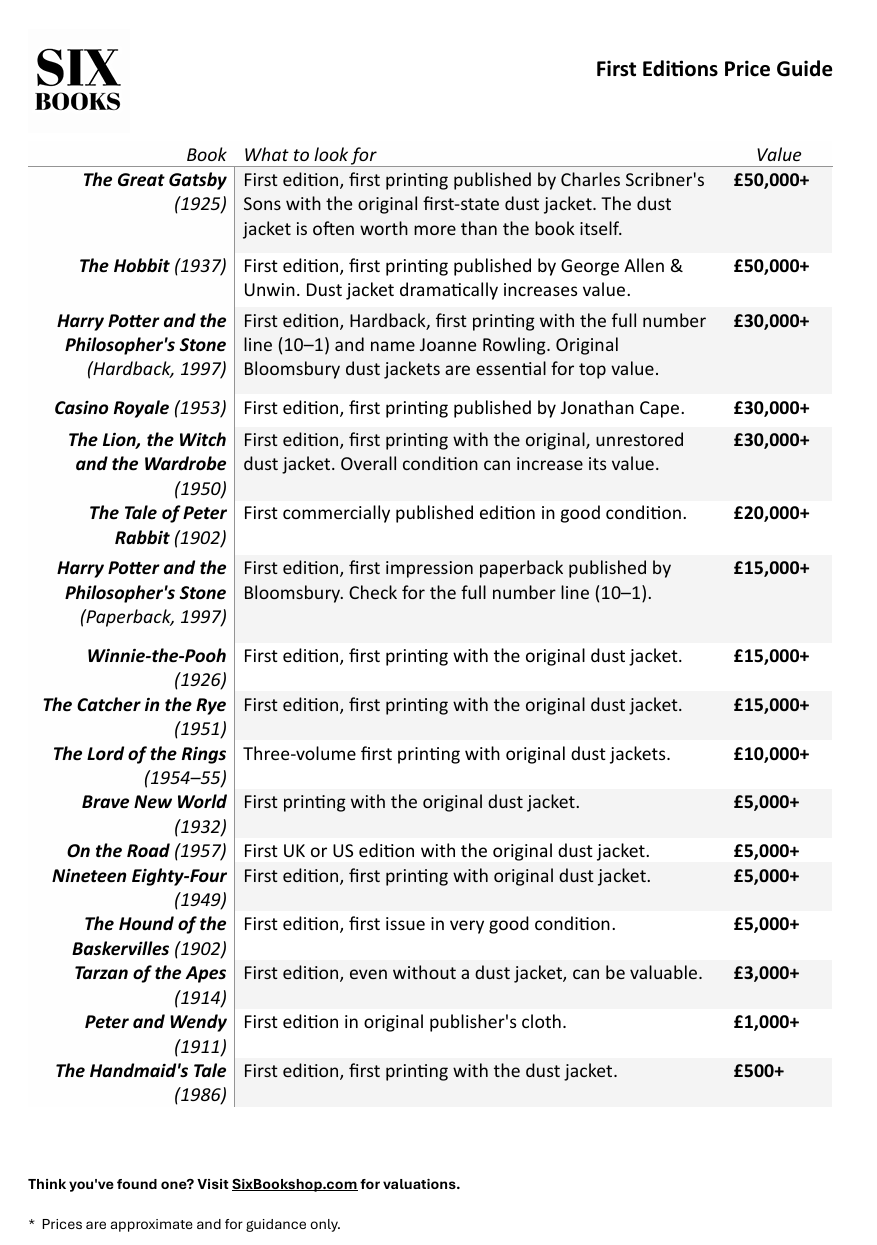
Download PDF Below
Determining the value and selling potential of your Harry Potter and the Deathly Hallows first edition depends on many factors, including its condition and unique attributes such as a genuine signature.
If you need more information about your book, please email me. You can also reach out via direct message. I am regularly available on Instagram @sixbookshop.
How to Find Beatrix Potter First Editions (1917 Rule)
Beatrix Potter First Editions are notoriously difficult to detect.
The publisher Warne & Co, doesn’t always date their books. This makes it hard to identify the true Beatrix Potter first editions.
I’ve also had my hands on what I thought were first editions before, only to miss out on a few minor details. Convinced that I had found a first edition, I even sent the copy to a renowned book dealer for feedback. Unfortunately, it was a much later edition.
So, whether you are a collector or simply hunting at the next car boot sale, the following post shows how to find first editions, including the tale of the Peter Rabbit first edition.
I have also created a free download called the Modern First Editions Price Guide.
Beatrix Potter First Editions
First, these books are printed exclusively by Frederick Warne and Co. You can find this publisher on the spine and title page.
These books were first printed in 1902. However, importantly in 1917 Warne became a limited company. So, if you have a book that says F. Warne & Co. Ltd you have a later print that is not a true first and not worth a lot of money.
Wondering how to date rare books when there is no date on the title page? You need to check the publishing company name to see exactly when that specific imprint operated. If it says Ltd, you can immediately rule it out as a first edition
Beatrix Potter Book Ltd Rule –
F. Warne & Co: The publisher on all commercial copies.
The 1917 Rule: Warne became a limited company in 1917.
Watch out for Ltd: If the book reads "F. Warne & Co. Ltd", it is a later reprint.
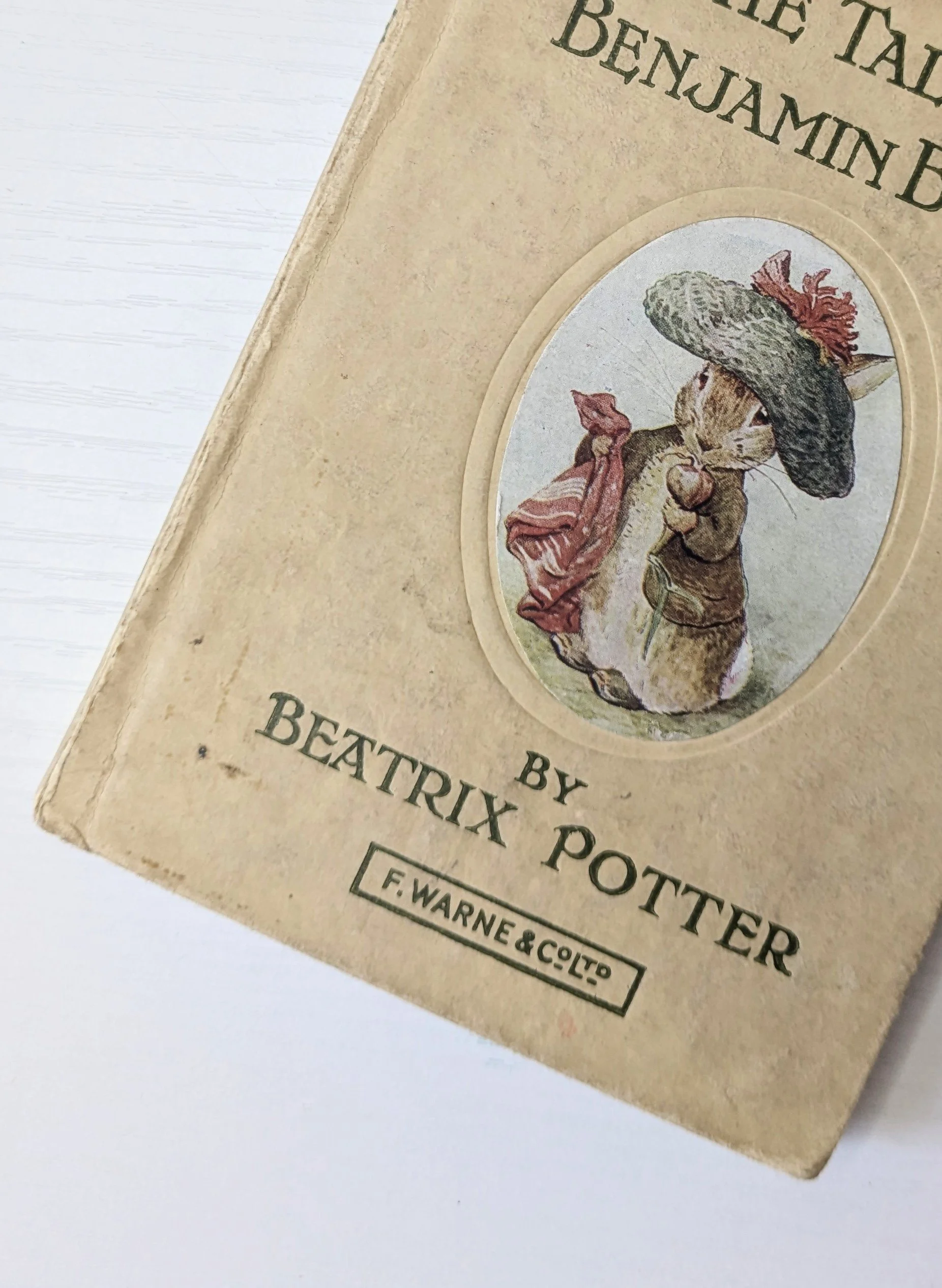
F. Warne & Co. Ltd
The Tale Of Peter Rabbit First Edition
Peter Rabbit began as an illustration by Beatrix Potter before becoming a loved rare children's book. There are numerous first editions of Peter Rabbit, starting with private printings before commercial release. Let’s look at these editions. The prices are estimates subject to condition and demand.
First Private Printing – £30,000+
Peter Rabbit first edition, first printing, December 1901. The true first edition: 250 copies were distributed to Potter’s family and friends and proved very popular. The First Edition Price has sold anywhere between £20k – 50k.
· Undated
· Beige plain cover
· 250 copies
Second Private Printing – £20,000+
Peter Rabbit first edition, second printing. February 1902. These look similar to the first printing but differ in two ways. First, the spine is rounded rather than flat, and the title page has the date February 1902.
In contrast, the title page of the first printing remains undated. These private printings are also not by the publisher Frederick Warne and Co.
· Dated February 1902
· Beige plain cover
· 200 copies
First Commercial Editions – £10,000
The success of the private printings resulted in a commercial edition of 8000 copies. These are in various bindings, each with a colour illustration on the cover.
The first three printings of the commercial edition were bound in brown or grey boards. After the first printing, the publisher also started binding copies in dark green boards. There were also deluxe issues in yellow and green bindings.
· Undated
· Dark Grey Cover
· Frederick Warne & Co
· 8000 copies
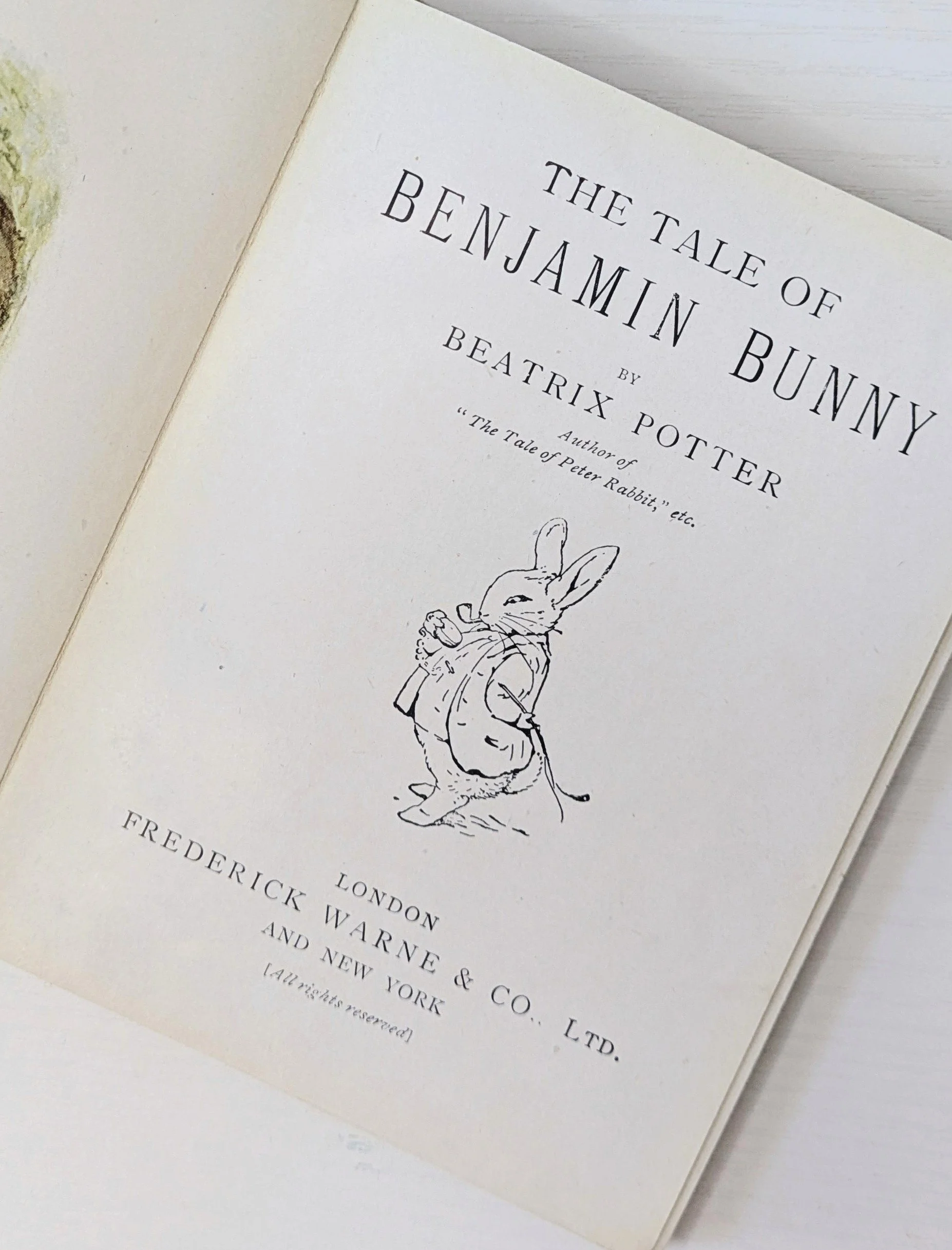
Check the Title Page
Other Titles
I have never seen a first edition Peter Rabbit, and it’s likely I never will. However, there are other vintage Beatrix Potter books that came out before 1907. Every single title in the 23-book series has its own highly unique dates and misprints. Here are a few rare children's books to look out for. These other titles are worth about £1,000-£500.
The Tale of Squirrel Nutkin (1903)
The true first edition has an illustration of Squirrel Nutkin on a patterned cloth board rather than plain paper boards. On the dedication page, the earliest printing states "A Story for Norah," which was altered or removed in later issues.
The Tailor of Gloucester (1903)
The Tailor of Gloucester had a private printing in December 1902 with a pink paper cover.The first commercial First Edition followed in 1903. The true commercial first edition features a single-page endpaper pattern that repeats four times.
The Tale of Benjamin Bunny (1904)
The Misspelling: Look closely at page 15. In the earliest state of the first edition, the word "muffetees" (a type of wrist warmer) is misspelt as "muffatees" with an 'a'.
In fact, this was the very first Beatrix Potter book I sold on eBay. I sold it to a customer on eBay who was buying a present for his daughter. They read these books together when she was a child, so it had sentimental importance to him.
The Tale of Two Bad Mice (1904)
The publisher's name must be listed exactly as F. Warne & Co. without any street addresses printed below it. It is also clearly dated with the year 1904. You can find examples of these faults on sites like Abe Books and compare them to your copy.
Condition Matters
Because these are rare children’s books, handled by children, surviving copies are rarely in good condition. It’s normal for these books to have minor wear to the covers and pages. If the books have ink inscriptions, this does not significantly reduce the price. Unless they have modern inscriptions in pen.
In addition, keep a lookout for intact glassine dust wrappers, as these will add immense value to your collection. Beatrix Potter First Editions, even with the information above, are difficult to detect.
As mentioned, ensure that they are printed before Warne became a limited company in 1917. If the book reads "F. Warne & Co. Ltd", it is a later reprint. Let's look at what to do if you find a rare book or need extra clarification.
Selling Rare Books
I previously published a blog post that looks at where to sell rare books. If you have a Beatrix Potter first edition or early books, the first thing I would do is look for the same edition online. Websites such as AbeBooks list rare books; you can also use eBay search to find previously sold listings.
Next, I would contact rare books shops, such as Peter Harringtons or Maggs Bros. These shops have online forms where you can enter your book's details and attach photos for a valuation. Dealers will usually offer less than the eventual retail price because they must cover restoration, storage, marketing and business costs.
Alternatively, I would contact an auctioneer with a good reputation. Check out the auction house's current listings, make sure they have a good website shop, and take quality photographs of their sales. Some examples of top auction houses in the UK are Adam Partridge, Forum Auctions and Dominic Winter.
If you find that your book is not a true first edition, you can still try selling it through an auction on eBay. Regular sellers can create an account and list items for free. Plus, as mentioned, you can check completed listings to see what similar Beatrix Potter books have recently sold for.
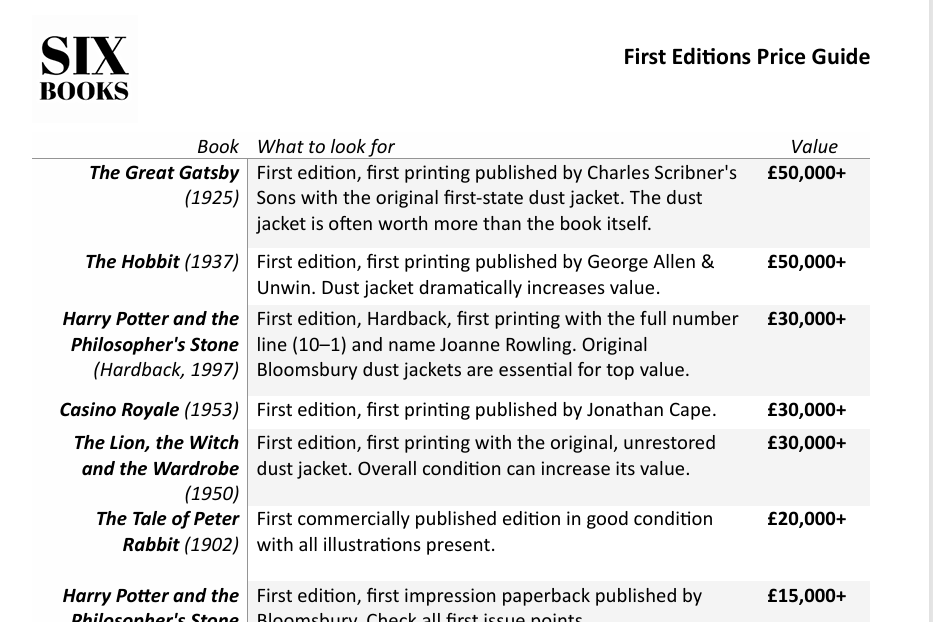
Download the guide below.
FAQ
How do I know if my Beatrix Potter book is a first edition?
To begin, check the publisher on the title page or spine. If it reads F. Warne & Co., your book may be an early edition worth investigating further.
If it reads F. Warne & Co. Ltd, it is a later printing and not a true first edition. From there, compare your copy to other copies online and check for printing errors.
Epilogue
Beatrix Potter first editions are hard to find, since not many books were published and they often have poor condition. Finding a true Beatrix Potter first edition takes careful checking and a valuation from a rare book dealer or an auctioneer.
Start with the publisher’s imprint; look closely for “F. Warne & Co.” rather than “F. Warne & Co. Ltd,”. If the publisher does not say Ltd, then you have an early edition. =
If you think you have found one, take clear photographs of the cover, spine, and title page and compare them with others.
I hope this blog post has helped you learn more about Beatrix Potter first editions. With the right checks, you might find a vintage Beatrix Potter book at a car boot sale, charity shop, or family bookshelf.