
Creative Ways to Use Vintage Botanical Prints
How to display vintage botanical prints? Since Victorian times, botanical illustrations have inspired artists, decorated homes, and filled scrapbooks.
Wondering how to make the most of your vintage botanical prints?
Framing and displaying them is an obvious place to start, but there are plenty of other ways to enjoy these illustrations.
In this guide, I will explore creative ways to use vintage botanical prints, alongside practical advice on choosing frames, displaying your illustrations and getting the most out of your collection.
Vintage Botanical Prints Framed
One of the simplest ways to use vintage botanical prints is to frame them.
I recently bought a natural history print at a local market. When I got home, I tucked it into a drawer and wondered when I would ever see it again if I didn't find a way to display it. The answer was simple: a frame and mount. After measuring the print, I found a plain white picture mount and a matching white frame on Amazon.
How to Frame a Vintage Botanical Print
Here's how to get started:
Measure. Measure the height and width
Choose a mount. A picture mount creates a border around the illustration, drawing attention to the artwork.
Select your frame. White, black, and natural wood frames can all work well.
Position your print. Centre the illustration within the mount.
Display your frame. Hang it on a suitable wall or place it on a shelf
If you're renting or prefer not to put nails into your walls, adhesive picture-hanging strips can be an alternative to traditional fixings.
Creative Freedom
Most of all, when it comes to displaying vintage botanical prints, you have complete creative freedom.
A neutral frame creates a simple look, while a wooden frame feels more antique and rustic. Alternatively, you could choose a contrasting colour to make the artwork pop.
In addition, try combining several vintage botanical prints to create a gallery wall. Experiment with different frame styles, sizes, and colours to create a unique display.
Another idea is to group illustrations by subject, such as wildflowers, ferns or mushrooms. Antique natural history books cover a wide range of subjects and illustration styles, so you can create a display that reflects your interests.
Antique Plates
Keep in mind, removing prints from antique books can damage the book and affect its value, particularly when the illustrations are still bound into the volume.
That's why I've created the Botanical Bundle, a collection of illustrations you can use in your projects without removing plates from antique books.
If you're renting or prefer not to put nails into your walls, adhesive picture-hanging strips can be an alternative to traditional fixings.
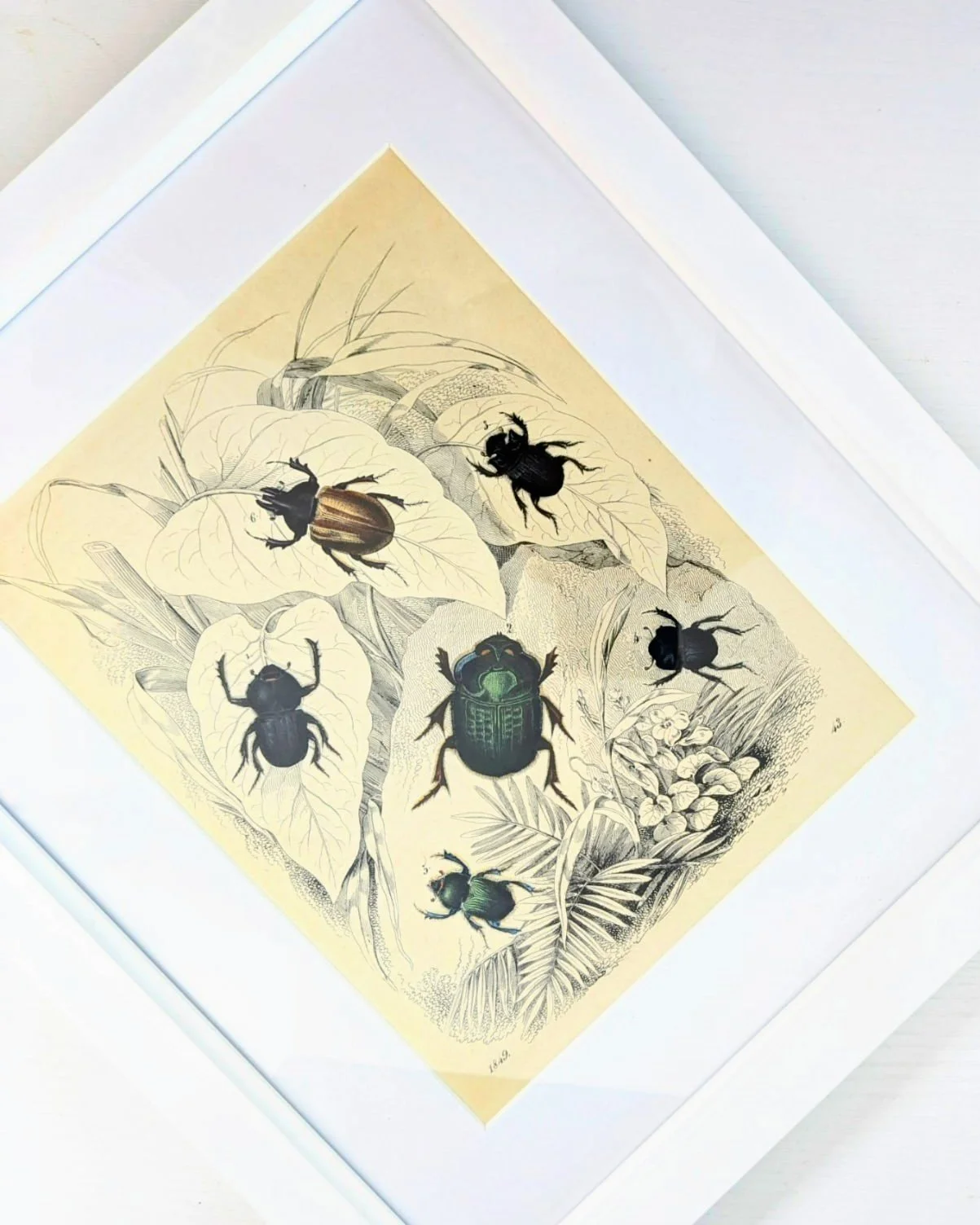
Framed Botanical Print
Scrapbook Design Ideas
Vintage botanical prints are also a great resource for scrapbook design. These botanical illustrations look beautiful in journals, cards and collages.
Nature journal: Combine botanical illustrations with journal entries.
Pressed flowers: Place real pressed leaves and flowers inside with illustrations of the same species.
Vintage collage: Layer botanical images with handwritten annotations, decorative paper and patterns.
Botanical pages: Include the plant's common name, aka Latin name.
Seasonal scrapbook: Create pages dedicated to spring flowers, summer gardens, and leaves.
Handmade cards: Use botanical illustrations to create personalised birthday cards, thank-you notes or greetings for nature lovers.
Pressed Flowers
One scrapbook design idea is to mix pressed leaves and flowers. You can press flowers and leaves using a flower press or between sheets of paper beneath a heavy book. Make sure the plant material is dry before adding it to your scrapbook
Also, use the captions and Latin plant names. These details add historical interest and provide information about the plants.
Collage Pages
For a more collage look, use stickers, handwritten notes, and vintage botanical prints. You can create a different theme for each page, from wildflowers and woodland plants to herbs and garden flowers.
More ideas on my Pinterest account.
As a rare bookseller, I would also encourage you to think about where your illustrations come from. Taking plates from books can damage the volume, reduce its value and remove information for future readers.
Preserving these books means protecting not only their illustrations but also their history and knowledge for future generations. That's why I've been creating my own botanical collection, offering another way to enjoy historical illustrations.


Botanical Inspiration
Vintage botanical prints are a wonderful reference for artists, tattoo artists and illustrators. When I sell books at local markets, illustrators looking for historical botanical books as references are among my most frequent buyers.
These illustrations appeal to artists because they show how people documented plants before modern photography.
If you're looking for botanical inspiration for your own creative projects, my Botanical Collection brings together out-of-copyright historical illustrations available for creative use. Whether you're an artist, illustrator or tattoo designer, these beautiful images offer inspiration from the world of natural history.
Detail
Antique botanical illustrations are excellent references for studying the structure of flowers, leaves, stems and roots. Artists can study how different parts of a plant fit together and use those observations to inspire their own drawings.
Colour
Look at how historical illustrators arranged stages of a plant's growth on one page. Study the use of colour to distinguish petals. These are useful lessons for anyone developing their own compositions.
Experiment
You can also use botanical plates as inspiration for watercolour painting, printmaking or digital illustration.
Botanical Art
Botanical art goes far beyond roses and garden flowers. Ferns, fungi, grasses, seed pods and wild plants can all provide interesting subjects for artists looking for something different.


Botanical Gifts
Vintage botanical prints, framed or otherwise, are the simplest way to showcase natural history pieces. However, another way to enjoy botanicals is to buy gifts.
I've also put together a guide to 12 Unique Gifts for Nature Lovers.
Antique botanical print: lovely gift for someone who appreciates illustrations.
Flower Press & album: Perfect for someone who loves flowers.
Terrarium kit: creative science gift
Vintage Nature book: For anyone who enjoys discovering the history of plants, wildlife and scientific illustration.
Pocket Loupe: A useful tool for examining leaf details.
Idea for gift, you can pair a botanical print with a flower press or nature journal. This makes a more personal gift for nature lovers.
Botanical Bundle
The Botanical Bundle is a digital collection of antique botanical illustrations. It's gathered for artists, illustrators and anyone looking for botanical inspiration. Plus, the illustrations are out of copyright, allowing you to use them in your own artwork, from botanical drawings to tattoo designs.
I came up with this project idea through my work as a rare bookseller. I kept discovering vintage botanical plates in antique natural history books, many of which I couldn't find anywhere else online. Once I sold them, the original artwork disappeared.
I began scanning and cataloguing these plates to preserve the images. It's also another way to appreciate historical illustrations without removing original plates from antique books, helping to preserve these volumes for future generations.
I'm currently working on the Botanical Bundle. If you'd like to hear when it's ready, sign up using the email form below, and I'll let you know when the collection launches.