
Roman Numerals for Booksellers
I’m embarrassed to admit that I don’t know my Roman numerals.
In my short bookselling career, I've come across plenty of dates and usually end up checking them on my phone. Maybe you know XI, but what about MMXXVI?
Booksellers need to understand Roman numerals when identifying the dates on antiquarian books. This is a short guide with a free cheat sheet below.
Roman Numerals
Booksellers commonly encounter Roman numerals on title pages, copyright pages, and in signatures when collating antiquarian books. Being able to recognise them quickly makes cataloguing and identifying editions much easier.
In addition, many publishers continued to print publication dates in Roman numerals, especially on limited editions and folios.
Roman numerals are formed by combining seven letters: I (1), V (5), X (10), L (50), C (100), D (500), and M (1000). Most numbers are written from largest to smallest, with a few exceptions that use subtraction, such as IV (4) and IX (9).
For example, 2026 is written as MMXXVI.
Subtraction Rule
In standard Roman numerals, numbers are read from left to right. When a smaller numeral appears before a larger one, you subtract its value from the larger one.
The Roman numeral for four is IV. Some clocks and monuments use IIII. The IV format is a subtraction (5 minus 1), making the number shorter and easier to read. You also use subtraction when writing the number nine, IX (10 minus 1).
1 - I
2 - II
3 - III
4 - IV
5 - V
6 - VI
7 - VII
8 – VIII
9 - IX
10 - X
Examples
XIV = 14
XVII = 17
XXIX = 29
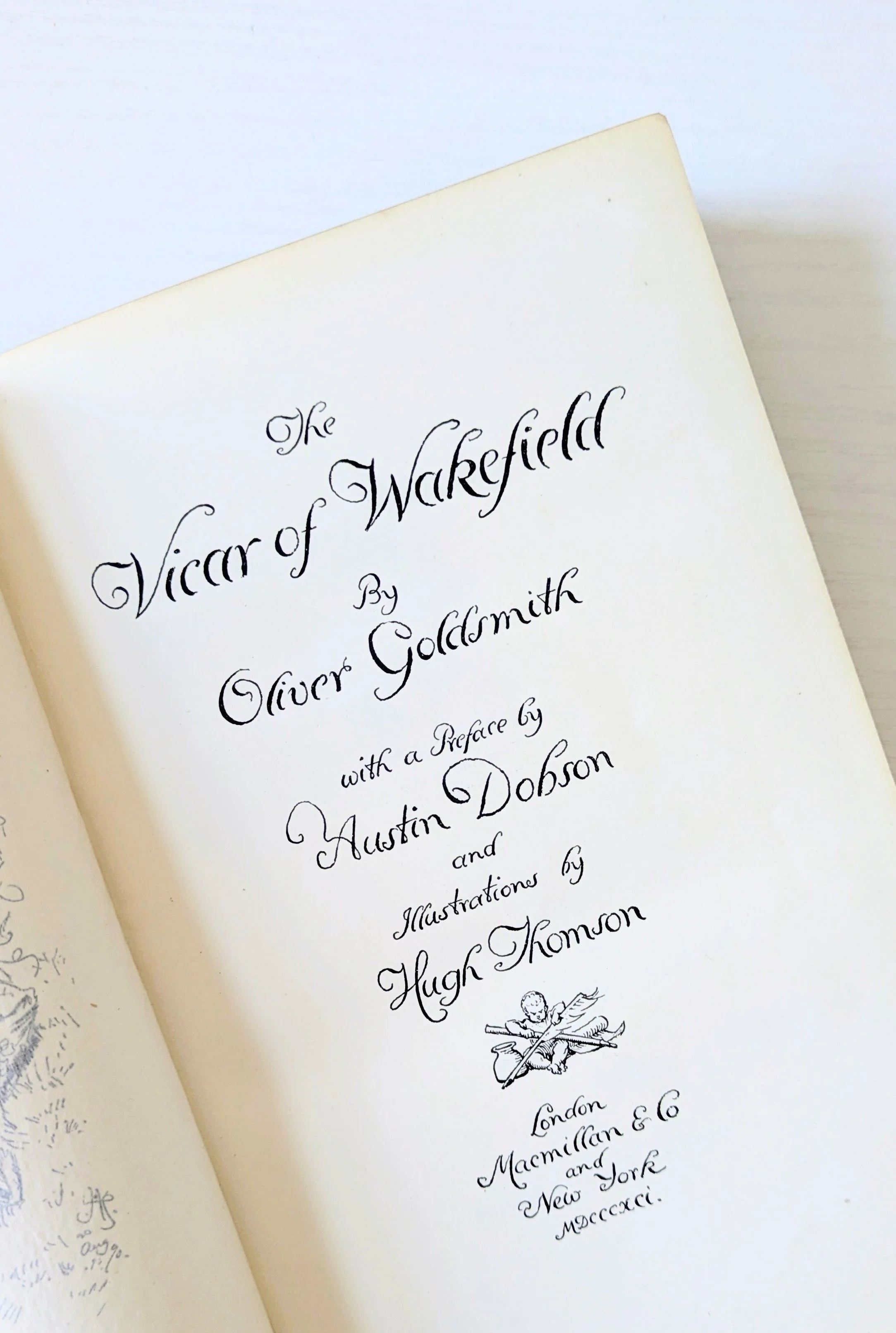
MDCCCXCI = 1891
Larger Numbers
The number 50 is written as L, and the subtraction rule applies to 40, written as XL. Similarly, 100 is written as C, and 90 is written as XC.
Another letter to remember is D for 500. So, the number 600 is written as DC. Lastly, we have 1000 represented by M.
10 – X
20 – XX
30 – XXX
40 – XL
50 – L
60 – LX
70 – LXX
80 – LXXX
90 – XC
100 – C
200 – CC
300 – CCC
400 – CD
500 – D
600 – DC
700 – DCC
800 – DCCC
900 – CM
1000 – M
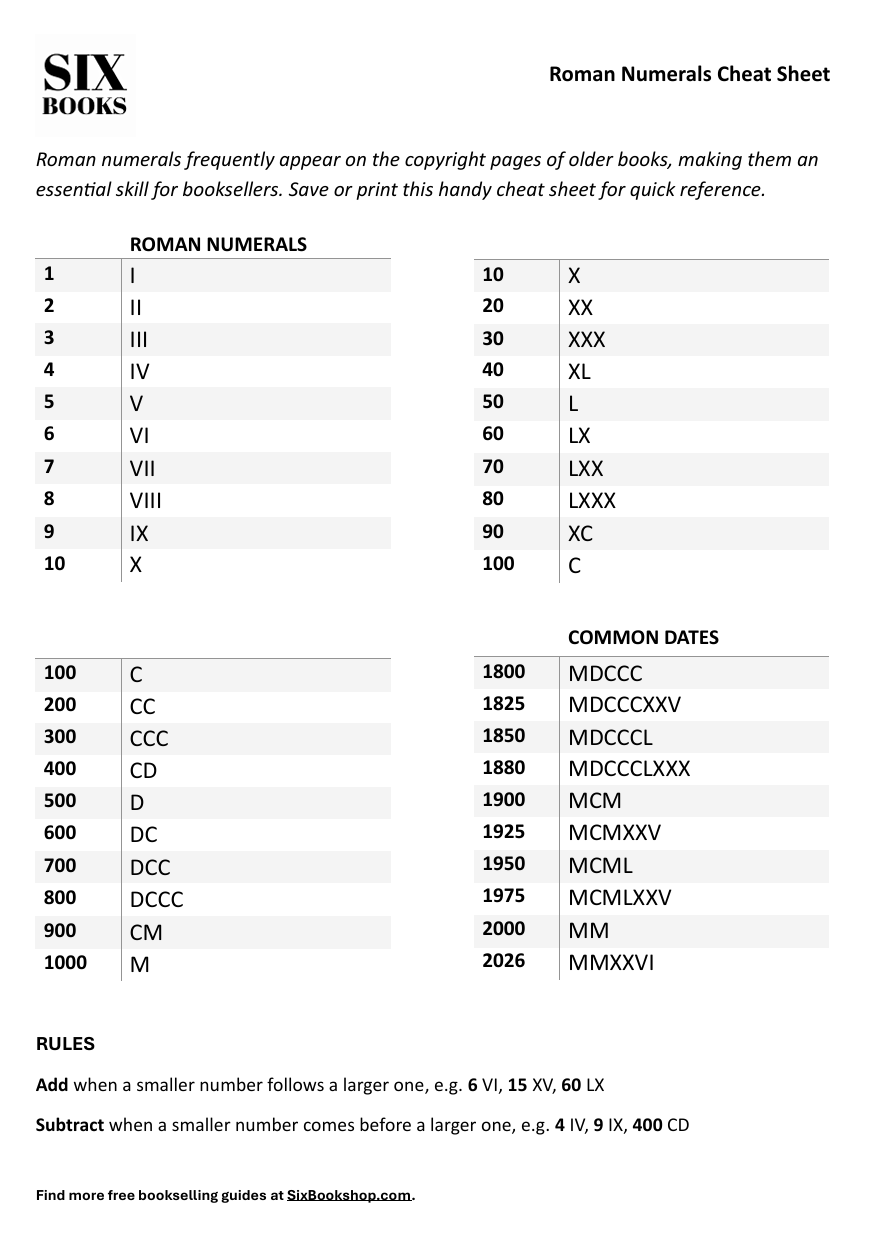
Download Below
Epilogue
Even after researching Roman numerals, I’m still struggling. It looks like I'll still need to keep revising before Roman numerals become second nature.
So, how did you do? How confident are you with your Roman numerals? Let me know below so I know I’m not alone.